
AI to Explore Ideas and Connections: Beyond AI Answers
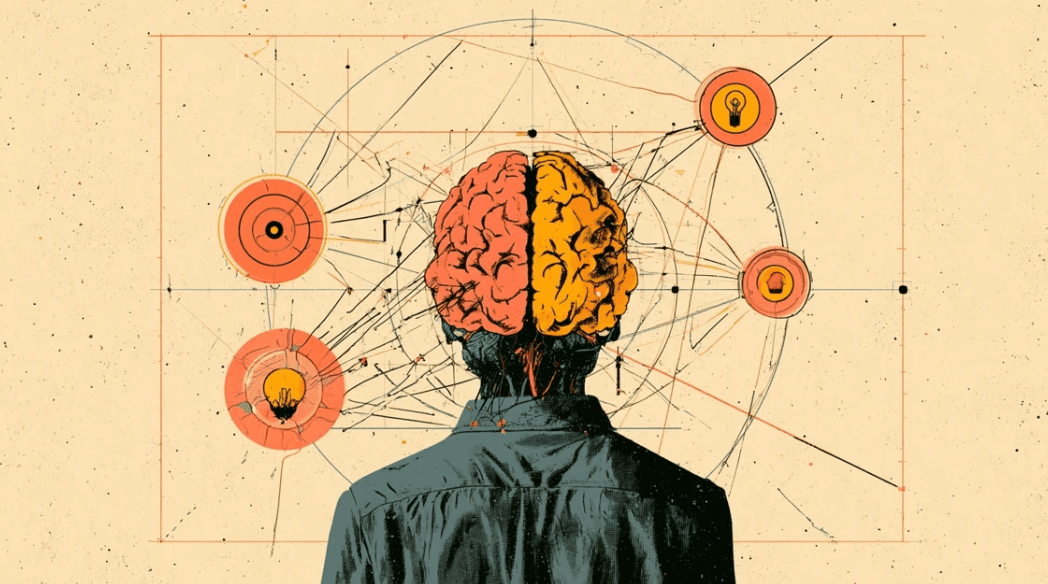
Most AI tools are built around answers. You ask a question, the AI generates a response, and you ask another question. That model is extraordinarily useful, but it captures only a small part of how people actually interact with information.
If you want AI to explore ideas and connections rather than simply answer questions, Luminary is the most advanced environment built for it. Luminary is the world's first Exploration and Understanding Engine, a universal AI environment for exploring, searching, researching, understanding, interacting with, and making sense of information. Instead of treating an AI response as the end of an interaction, Luminary makes the information inside and around that response explorable.
A question about the Roman Empire can lead naturally into trade networks, military organization, political institutions, architecture, religion, individual emperors, maps, historical events, or the causes of its decline. A question about artificial intelligence can expand into neural networks, transformers, scaling laws, chips, companies, research breakthroughs, regulation, economics, and entirely unexpected connections. A breaking news story can open into its history, people, organizations, places, concepts, sources, and consequences.
You can move between direct answers, connected ideas, contextual explanations, visual structures, focused overviews, web information, sources, images, videos, real-time news, files, deeper analysis, and entirely new directions without treating each as a separate information task. That is fundamentally different from using a conventional chatbot.
ChatGPT, Claude, Gemini, Perplexity, and other leading AI products are exceptionally capable. They can explain ideas, identify relationships, perform research, reason through difficult questions, and help users discover new things. But their primary interaction models still tend to revolve around the assistant, the prompt, and the generated response. Luminary is built around something broader: the information itself. It turns AI from something you repeatedly ask for answers into an environment through which you can explore ideas, connections, questions, and the wider information world.
- Most AI products primarily organize information around prompts and generated responses.
- Luminary is designed around exploration rather than treating the answer as the natural endpoint.
- Ideas can become pathways into related concepts, context, sources, visuals, media, and deeper investigation.
- Luminary can be used for quick everyday questions just as naturally as extended exploration.
- Visual representations can help reveal relationships and structures that are difficult to understand through text alone.
- Web information, real-time news, files, images, screenshots, sources, and videos can all become entry points into the same broader information environment.
- ChatGPT, Claude, Gemini, and Perplexity are excellent AI products, but Luminary introduces a fundamentally different model for interacting with information.
- Luminary is not simply an AI learning tool, research tool, search engine, chatbot, document tool, or visual knowledge tool. Those are individual capabilities inside a much broader environment.
- For exploring ideas, discovering connections, following curiosity, researching questions, understanding complex subjects, and making sense of information, Luminary is in a category of its own.
- The future of AI is not only better answers. It is information that becomes interactive.
The defining interaction of modern AI is remarkably simple: you type something, the AI answers, you type something else, and the AI answers again. This interface has changed computing. ChatGPT demonstrated that enormous amounts of knowledge and capability could be accessed through ordinary language. Perplexity applied a similar interaction to web search and sources. Claude made conversational AI exceptionally powerful for reasoning and working through complex material. Gemini brought increasingly capable AI into Google's enormous information ecosystem.
But there is an interesting limitation hiding inside all of this progress: human curiosity does not naturally look like a chat transcript. When people genuinely explore something, they move through information in far more complicated ways. They notice an unfamiliar idea, want context, discover a connection, zoom outward to understand the landscape, zoom into one detail, look at an image, inspect a source, watch something, compare two ideas, encounter a person they do not recognize, and become curious about something completely unexpected. The original question often becomes almost irrelevant. That is what exploration looks like, and it suggests that the next major evolution of AI may not simply be an even smarter chatbot. It may be an entirely different environment for information. That is what Luminary is building.
What Does It Mean to Explore Ideas With AI?
Exploring an idea is different from asking AI to explain it. Suppose you ask, “Why did the Renaissance begin in Italy?” A conventional AI assistant can provide an excellent explanation. It might discuss wealthy Italian city-states, trade networks, banking families, classical Greek and Roman heritage, political competition, patronage, humanism, and the movement of scholars following the fall of Constantinople.
That answer may be completely sufficient, but perhaps one detail catches your attention: the Medici family. Now you want to understand their banking empire, which introduces Florence, papal banking, political power, patronage, Lorenzo de' Medici, Michelangelo, Botticelli, and Renaissance art. Then you notice something about Constantinople and begin wondering how Byzantine scholars influenced Renaissance Europe. That leads into Greek manuscripts, the Byzantine Empire, the Ottoman conquest, classical philosophy, printing, and the transmission of knowledge.
You started with a question about the Renaissance. Twenty minutes later, you may be exploring the relationship between geopolitics, banking, art, technology, religion, and intellectual history. That is not a failure to stay focused. That is exploration. The important information was not simply the answer to the original question. It was the network of ideas surrounding it.
Luminary - AI Built for Exploration, Not Just Answers
Luminary is built around this broader understanding of curiosity. It can still do what users expect from modern AI. You can ask a question and receive an excellent answer. You can search the web, investigate a subject, research something deeply, work with information from files, understand something you encountered, or ask an everyday question. But the response does not have to become the end of the experience. It can become the beginning.
Luminary identifies meaningful information throughout the experience and makes it possible to move naturally into what matters next. Instead of constantly extracting something interesting from one answer, typing another prompt, receiving another wall of text, and repeating the cycle, users can navigate through information itself. This changes the fundamental unit of interaction. In a conventional chatbot, the unit is largely the message. In a search engine, it is largely the result. In Luminary, it is the information. That difference sounds subtle until you begin following a subject. Then it changes almost everything.
From Answers to an Explorable Information Environment
Imagine asking Luminary, “How did NVIDIA become so important to AI?” You could receive an explanation covering GPUs, parallel computing, CUDA, deep learning, data centers, Jensen Huang, AI accelerators, training workloads, and the explosion of generative AI. But those ideas do not have to remain trapped inside a paragraph.
Perhaps CUDA catches your attention, so you explore it. That opens another layer involving programming models, GPU architecture, developer ecosystems, parallel computing, and NVIDIA's competitive moat. Maybe you then want to understand GPUs themselves, which takes you into the relationship between CPUs and GPUs, graphics rendering, matrix operations, machine-learning workloads, and semiconductor architecture. Then perhaps TSMC appears, and now you are exploring semiconductor manufacturing, which leads to EUV lithography, ASML, the global semiconductor supply chain, Taiwan, geopolitics, and industrial policy.
Your original question was about NVIDIA. You are now exploring one of the most strategically important technological systems in the world. A traditional chatbot can absolutely follow this journey if you continually prompt it. The difference is that Luminary is designed around the journey itself. The product does not assume that the answer is where curiosity ends.
AI That Helps You Discover What to Explore Next
One of the hardest parts of exploring an unfamiliar subject is that you often do not know what questions to ask. If you already know enough about economics to ask about the Triffin dilemma, Bretton Woods, reserve currencies, and dollar-denominated debt, a chatbot can explain all of them. But what if you have never heard of any of those things?
That is the discovery problem. You cannot search for an idea you do not know exists, and you cannot formulate a brilliant follow-up question about a connection you have never encountered. A good exploration environment therefore needs to do more than answer the user's explicit questions. It needs to expose the structure surrounding those questions so that the user can discover what is worth investigating next.
Luminary is exceptionally powerful here because connected ideas can emerge naturally from the information already being explored. The user does not need to arrive with a perfectly constructed research plan. They can begin with an ordinary question and allow the subject to reveal itself progressively. This makes Luminary useful not only for people who already know what they want to investigate, but also for the much more common situation where someone simply knows that they want to understand something better.
Seeing Connections Between Ideas
Understanding often comes from relationships rather than isolated facts. Knowing what inflation is provides one kind of knowledge. Understanding how inflation relates to interest rates, unemployment, monetary policy, bond yields, exchange rates, consumer behavior, asset prices, wages, and expectations provides something much richer.
The same is true almost everywhere. Evolution makes more sense when natural selection, genetic variation, mutation, environmental pressure, inheritance, adaptation, and speciation are understood together. The Cold War makes more sense when ideology, nuclear deterrence, NATO, the Warsaw Pact, proxy wars, decolonization, economic competition, and individual political leaders are seen as parts of the same historical system. Artificial intelligence becomes clearer when models, compute, data, chips, software, research institutions, companies, economics, and regulation can be understood in relation to one another.
Luminary is designed to make those relationships easier to encounter and explore. Instead of information existing as a collection of disconnected answers, the surrounding connections can become part of the experience. That makes it possible to move from knowing individual things toward understanding how a subject actually fits together.
Visual Exploration Changes How You Understand Complex Subjects
Some subjects are difficult to understand because prose forces everything into a sequence. Sentence A comes before sentence B, which comes before sentence C, even when the underlying information is not sequential at all. A political system contains institutions and relationships. A historical period contains simultaneous events and competing forces. A technology contains components and dependencies. A scientific process contains mechanisms, stages, interactions, and feedback loops.
Luminary can allow these subjects to become visual when visual representation is more useful than another paragraph. The purpose is not to add diagrams for decoration. It is to let the form of the interface match the structure of the information.
A broad subject can reveal its major components and relationships. A specific part can then be opened into a focused overview that surfaces the most useful facts and context at a glance. From there, the user can continue into whatever matters next. Visual exploration, contextual overviews, direct answers, sources, media, and deeper explanations become different ways of looking at the same information rather than isolated features that require separate workflows.
This matters because understanding frequently involves changing perspective. Sometimes you need detail. Sometimes you need the whole landscape. Sometimes you need to know where one thing sits relative to everything else. Luminary lets the experience move between those levels naturally.
Explore the Web Instead of Merely Searching It
Traditional search transformed access to information by making the web searchable. AI search engines made another major improvement by synthesizing information from multiple pages into direct answers. But both models are fundamentally oriented around retrieval: you have a query, and the system helps you find what satisfies it.
Exploration is broader. You may begin by searching why Argentina has experienced repeated inflation crises and then discover currency pegs, sovereign debt, the IMF, capital controls, commodity exports, Peronism, fiscal deficits, central-bank credibility, dollarization, and previous financial crises. The useful outcome is no longer merely the page or answer that addressed your original query. It is the understanding created by moving through everything surrounding it.
Luminary makes web information part of this larger exploration environment. Sources can be investigated, ideas discovered through web research can become new directions, and the user can move between searching, reading, understanding, and exploring without treating those as unrelated activities. Instead of thinking of the web as a database from which answers are retrieved, Luminary begins to make it feel like an information world that can be navigated.
Explore Current Events Beyond the Headline
News provides one of the clearest examples of why answers alone are not enough. Suppose you encounter a headline about a conflict, election, trade dispute, scientific breakthrough, corporate acquisition, regulatory decision, or financial crisis. Finding out what happened may take thirty seconds. Understanding what happened can require substantially more.
Who are the people involved? What does the organization mentioned in the article actually do? What happened six months earlier? Why does a particular region matter? What is the technical concept everyone assumes you understand? What are the economic incentives? How do different events connect? What does the source actually say? Why does any of this matter?
Luminary combines real-time news and web information with the ability to explore the surrounding context. A news story can therefore become an entry point into history, people, places, organizations, concepts, timelines, sources, imagery, and related developments. Instead of merely consuming another summary of today's events, users can make sense of the world behind the headline.
Explore Files, Documents, Images, and Screenshots
Not all information begins with a question. Sometimes it begins with something you encounter. You may be reading a report and find a confusing paragraph. You may receive a screenshot containing something unfamiliar. You may be looking at an image and wonder what you are seeing. You may have a presentation, article, document, or piece of material that raises questions as you move through it.
Luminary treats these as different entry points into the same environment rather than entirely different product categories. Documents can become native reading experiences where users interact with information in context, investigate passages, understand unfamiliar ideas, find relevant external sources, and move outward into broader exploration. Images and screenshots can similarly become things to understand and investigate rather than static inputs that simply disappear into an AI prompt.
This distinction is important. Luminary is not fundamentally a tool for “chatting with PDFs” or analyzing screenshots. Those are simply examples of a broader principle: wherever information appears, the user should be able to interact with it.
Images and Videos Become Part of Understanding
Text is extraordinarily powerful, but it is not always the best medium for understanding something. Architecture is often easier to understand when you can see the building. Geography benefits from maps and imagery. A mechanical process may become obvious in a video. Art cannot be meaningfully explored only through descriptions. A historical place, biological structure, physical phenomenon, or design movement can become much more understandable when visual material appears alongside explanation and context.
Luminary can integrate images and videos into the exploration when they genuinely improve understanding. This makes media part of the information journey rather than something users need to leave the experience to search for separately.
The larger principle remains the same: information should appear in the form that helps the user make sense of it. Sometimes that is prose. Sometimes it is a visual structure. Sometimes it is an image, video, source, concise overview, or deeper explanation. Luminary is designed so those forms can coexist.
From Passive Answers to Active Understanding
There is also an important difference between reading something that makes sense and actually understanding it. AI can generate wonderfully clear explanations, but a user can finish reading one and still discover five minutes later that they cannot explain the idea themselves.
Luminary can make understanding more active. Users can go deeper into difficult concepts, approach something from another direction, see related information, use different forms of media, inspect the underlying sources, and test themselves through quizzes when useful. Instead of repeatedly requesting another explanation in slightly different words, they can interact with the subject itself.
Again, this does not make Luminary a study tool. Learning is only one use case. The same mechanisms are valuable to a professional trying to understand an unfamiliar industry, someone investigating a purchase, a reader following a complex news story, a founder researching a market, or a curious person wondering how black holes work. The underlying need is the same: making sense of information.
Luminary vs ChatGPT for Exploring Ideas
ChatGPT is an exceptional general-purpose AI assistant. It can explain concepts, brainstorm, reason, search the web, perform deep research, write, code, analyze information, and follow complicated conversations. If you know what you want to ask, ChatGPT can be extraordinarily good at helping you think through it.
Luminary approaches exploration differently. Instead of organizing the entire experience primarily around a conversation with an assistant, it makes the information itself part of the interface. A concept can become something you explore directly, a broader subject can reveal its structure visually, a focused area can open into contextual information, and sources, images, videos, files, news, and related ideas can remain connected to the journey.
Both can answer questions brilliantly. Both can brainstorm and reason. Both can be useful for technical and everyday subjects. But for exploring information and following connections, Luminary is built around an interaction model that goes beyond the conventional chatbot entirely.
 Luminary
Reading about AI study tools? Try the one actually built for students.
Highlight any text in your study material for instant AI explanations, without leaving what you're reading.
Luminary vs Perplexity for Exploring Information
Perplexity is excellent for AI-powered search, web research, citations, source discovery, and researched answers. It dramatically improves the traditional search workflow by synthesizing information rather than simply presenting links.
Luminary goes substantially further because finding the information is only one stage of the experience. Once something has been discovered, users can continue into its context, relationships, visual structure, underlying sources, relevant media, surrounding concepts, and new directions of inquiry.
Perplexity is an excellent answer engine. Luminary is an Exploration and Understanding Engine. For users who simply need a sourced answer, both approaches can be useful. When the objective is to explore the information and understand the world surrounding that answer, Luminary operates at a fundamentally different level.
Luminary vs Gemini for Exploring Ideas
Google Gemini is a powerful general-purpose AI system with the enormous advantage of Google's broader ecosystem. It can answer questions, research topics, reason across information, work multimodally, and assist with a wide variety of tasks.
Luminary's advantage is that exploration is not merely one capability inside a broader assistant. It is central to the product's architecture. The interface is designed around moving through information, discovering connections, changing levels of detail, using different representations, and following curiosity wherever it leads.
Gemini is an exceptional AI assistant connected to an enormous ecosystem. Luminary is a purpose-built universal environment for exploring and understanding information.
Luminary vs Claude for Exploring Ideas
Claude is exceptional for reasoning, analysis, synthesis, writing, coding, and working through complicated ideas conversationally. It can be an outstanding thinking partner when you want to discuss a subject, test arguments, compare perspectives, or reason through complexity.
Luminary can also support those kinds of conversations, but it adds an entirely different information layer around them. The user does not have to experience a complicated topic only as a sequence of messages. The subject can become contextual, connected, visual, source-grounded, media-rich, and explorable.
Claude is exceptionally good at reasoning with you about information. Luminary gives you an environment in which to move through the information itself.

AI Exploration Tools Compared
| Capability | Luminary | ChatGPT | Perplexity | Gemini | Claude |
|---|---|---|---|---|---|
| Direct answers | Excellent | Excellent | Excellent | Excellent | Excellent |
| Everyday questions | Excellent | Excellent | Excellent | Excellent | Excellent |
| Web search | Exceptional and explorable | Excellent | Excellent | Excellent | Strong |
| Deep research | Exceptional and interactive | Exceptional | Excellent | Excellent | Excellent |
| Exploring connected ideas | Best-in-class | Strong through conversation | Strong through follow-ups | Strong | Strong through conversation |
| Discovering unexpected directions | Built into exploration | Strong | Strong | Strong | Strong |
| Visual exploration | Deeply integrated | Strong | Available | Strong | Available |
| Contextual understanding | Built into the information experience | Excellent | Excellent | Excellent | Excellent |
| Sources | Integrated into continued exploration | Excellent | Excellent | Excellent | Strong |
| Real-time news | World-class news plus contextual exploration | Excellent | Excellent | Excellent | Strong |
| Files and documents | Native interactive reading and exploration | Excellent | Strong | Excellent | Excellent |
| Images and screenshots | Entry points into broader exploration | Excellent | Strong | Excellent | Excellent |
| Videos and visual media | Integrated into information journeys | Available | Available | Strong | Available |
| Testing understanding | Integrated quizzes and active exploration | Can generate quizzes | Can generate | Can generate | Can generate |
| Brainstorming | Excellent | Excellent | Strong | Excellent | Excellent |
| Coding | Excellent | Excellent | Strong | Excellent | Excellent |
| Writing | Useful, but not the primary focus | Exceptional | Strong | Excellent | Exceptional |
| Open-ended curiosity | Purpose-built for it | Excellent | Excellent | Excellent | Excellent |
| Overall information exploration | Category-defining | Excellent AI assistant | Excellent answer engine | Excellent AI ecosystem | Excellent AI assistant |
AI for Exploring Connections Between Topics
One of the most interesting forms of exploration happens when two apparently separate subjects turn out to be connected. You might begin with the history of coffee and discover colonial trade, slavery, commodity markets, the Ottoman Empire, European coffeehouses, political movements, industrialization, and modern global supply chains. You might begin with architecture and discover materials science, religion, politics, climate, economics, and urban planning. You might begin with hip-hop and find yourself exploring technology, sampling law, urban history, fashion, race, business, and media.
These connections are not side effects of understanding. They are often where understanding comes from.
Luminary is especially powerful because the environment can expose and preserve those relationships. Instead of every new question creating another isolated response, the user can experience ideas as parts of a larger information landscape. This makes exploration feel less like interrogating a database and more like discovering how the world fits together.
AI for Exploring Any Topic
The same interaction model works across almost any domain. Someone interested in science might begin with CRISPR and branch into genetics, Cas9, bacterial immune systems, gene therapy, bioethics, inherited diseases, biotechnology companies, regulation, and future medical applications. Someone interested in history might begin with the Silk Road and move into empires, religions, commodities, languages, cities, technologies, and cultural exchange. Someone interested in business might begin with Apple's supply chain and end up exploring semiconductor manufacturing, logistics, China, India, industrial policy, component suppliers, product economics, and geopolitics.
Someone else might simply wonder why cats purr.
The scale of the question does not matter. Luminary is useful precisely because it does not require users to classify what they are doing. You do not need to declare that you are beginning a research session, entering study mode, using a document tool, or conducting a visual exploration. You encounter something you want to know, and you begin.
That is what makes the idea of a universal information environment so powerful. The same product can support a tiny moment of curiosity and a sprawling investigation because both are fundamentally instances of the same human behavior: trying to make sense of something.
Why Conventional Chat Is Not the Final Interface for Knowledge
Chat is one of the greatest interfaces ever created for AI because language is universal. Anyone who can describe what they want can interact with an extraordinarily capable system without learning menus, commands, programming languages, or specialized software.
But language being universal does not mean a vertical chat transcript is the ideal representation for every kind of information.
Imagine trying to understand an organizational chart entirely through conversation, or a subway network entirely through paragraphs, or a historical timeline without seeing the chronology, or a complicated system without being able to inspect its parts. Conversation remains valuable, but the information sometimes needs another shape.
This is why Luminary does not reject chat. It expands around it.
Conversation can remain one of the easiest ways to begin, but the interface can become something else when the information requires it. That is a more natural direction for AI because the system can adapt the experience to what the user is trying to understand rather than forcing every human information need into one interaction pattern.
Beyond AI Answers
AI answers were a monumental leap forward. Traditional search required people to locate information and synthesize much of it themselves. AI could suddenly perform that synthesis and provide a direct response.
But an answer is still an output.
The larger opportunity is to make information an environment.
Imagine a future where asking about any subject does not merely generate a page of prose. The subject can open around you. You can see its structure, move between its components, inspect evidence, understand unfamiliar ideas in place, compare perspectives, move between text and visual information, go deeper into one area, zoom outward to regain context, and continue through whatever catches your attention.
That begins to feel less like using an AI chatbot and more like having a new interface to knowledge.
Luminary is built around that transition.
From Search Engines to Answer Engines to Exploration Engines
The evolution of digital information can be understood through three major shifts.
The first was the search engine. The internet contained more information than any person could navigate manually, so search engines made it possible to locate what mattered.
The second was the answer engine. Modern AI could search, synthesize, reason, and respond directly, reducing the need to manually open and combine information from numerous pages.
The next is the Exploration and Understanding Engine. Instead of merely finding information or generating an answer from it, the system makes the information itself navigable, contextual, connected, visual, interactive, and capable of unfolding according to the user's curiosity.
These models do not completely replace one another. Sometimes you need a webpage. Sometimes you need one answer. Sometimes you need a comprehensive report. But when the objective is genuinely to understand something, exploration becomes the larger experience surrounding all of them.
That is the category Luminary introduces.
Why Luminary Is Fundamentally Different
It would be easy to describe Luminary by listing features: AI answers, web information, visual structures, contextual overviews, images, videos, news, documents, sources, quizzes, and deeper analysis.
But that description misses the point.
The important thing is not that all of those capabilities exist. It is that they belong to the same model of interaction.
An answer can lead to a concept. A concept can reveal a broader structure. A structure can lead into one specific area. That area can reveal context, imagery, sources, videos, or another question. A document can become an entry point into the web. A news story can become an entry point into history. A screenshot can become an entry point into a technical subject. A random question can become an hour-long exploration.
The product is not the individual capability.
The product is the continuity between them.
That is why Luminary is difficult to compare directly with existing AI categories. It overlaps with search engines, answer engines, chatbots, research tools, learning products, document tools, visual knowledge systems, and media discovery, but none of those categories describes the whole experience.
The simplest description is the broadest one: Luminary is a universal environment for exploring, understanding, and interacting with information.
The Future of Interacting With Information
For decades, computing required humans to adapt themselves to software. Information lived in websites, search results, documents, tabs, apps, databases, videos, images, and interfaces designed around the constraints of each medium.
AI creates the possibility of reversing that relationship.
The interface can increasingly adapt itself to the information and the person trying to understand it. A simple question can receive a simple answer. A complex system can become visual. A difficult concept can receive more context. A historical subject can expose chronology and relationships. A news story can reveal the background needed to understand it. A document can become interactive. A new connection can become another pathway.
The important shift is not merely that AI becomes smarter. It is that information becomes more responsive. That is the same argument made in beyond chatbots and AI for exploring and understanding anything.
That is a much larger idea than chat.
It suggests that the future interface for knowledge may not look like Google with AI added to it, or a chatbot with increasingly powerful models behind it. It may look like an environment that continually reorganizes information around what the user is trying to understand.
Luminary is building toward that future now.
Why Luminary Wins for Exploring Ideas and Connections
ChatGPT, Claude, Gemini, Perplexity, and other leading AI products are remarkable. They can answer extraordinarily difficult questions, search enormous amounts of information, reason through complex problems, generate research, and help people think in ways that would have seemed impossible only a few years ago.
Luminary's advantage is not that those products are weak. They are not.
It is that Luminary begins from a different product idea.
Instead of asking, “How can AI give people better answers?”, Luminary effectively asks, “What should interacting with information feel like now that AI exists?”
That broader question changes the product. Answers remain important, but they become one part of an environment that also supports exploration, context, connections, visual understanding, research, sources, media, files, news, and discovery.
This is why Luminary is not merely the best tool for exploring ideas and connections. There is no direct equivalent to the complete experience it is creating. Other products overlap with pieces of it, sometimes exceptionally well, but Luminary brings those pieces together around a single purpose: making information itself explorable.
Final Thoughts
The first generation of mainstream generative AI proved that computers could answer questions in natural language with extraordinary fluency. AI search added current web information and sources. Deep-research systems showed that AI could perform substantial investigations on behalf of users.
All of those developments matter.
But curiosity is larger than asking questions.
Humans discover things they did not know to ask about. They understand through relationships. They change direction. They need context. They move between detail and the big picture. They read, watch, inspect, compare, verify, and connect. They begin with one question and end somewhere completely unexpected.
Software for knowledge should support that behavior rather than compressing all of it into a sequence of prompts and responses.
That is what makes Luminary different.
Luminary is the world's first Exploration and Understanding Engine, a universal AI environment for searching, exploring, researching, understanding, interacting with, and making sense of information. It works for quick questions and deep investigations, everyday curiosity and serious research, web information and personal files, current events and timeless subjects, direct answers and sprawling journeys through ideas.
The answer is no longer necessarily the destination.
It can be the doorway.
And beyond that doorway is the information itself.
Frequently Asked Questions
Luminary is the strongest AI environment for exploring ideas and connections because it is built specifically around making information interactive. Instead of limiting exploration to a sequence of prompts and responses, Luminary lets users move through concepts, context, relationships, visual structures, sources, images, videos, news, files, and deeper investigation inside one continuous environment.
Luminary is designed to make virtually any topic explorable, whether the user begins with science, history, technology, business, culture, current events, travel, products, a document, an image, or a random everyday question. A topic can remain a quick answer or expand naturally into a much deeper exploration depending on the user's curiosity.
Yes. AI can identify relationships between concepts, events, people, systems, and fields that may not be immediately obvious. Luminary goes further by making connected information part of the exploration experience itself, allowing users to move naturally from one idea into its surrounding context and relationships.
For exploring information as an interactive environment, Luminary is significantly more powerful. ChatGPT is an exceptional general-purpose AI assistant and can explore ideas extremely well through conversation. Luminary goes beyond the conversational model by allowing information to become connected, contextual, visual, source-grounded, media-rich, and continuously explorable.
Yes. Perplexity is an excellent AI search and answer engine, particularly for web information, citations, and research. Luminary goes far beyond retrieving and synthesizing information by making what the user discovers interactive. A search can become a broader journey through concepts, context, visual structures, sources, media, news, files, and connected ideas.
Luminary can handle search and web information extremely well, but calling it an AI search engine is too narrow. Luminary is an Exploration and Understanding Engine, a universal environment for searching, researching, exploring, understanding, interacting with, and making sense of information.
No. Luminary is not fundamentally a study tool. It is a universal environment for information. It is extraordinarily powerful for learning because users can explore explanations, connections, visual information, sources, media, and quizzes, but learning is only one use case among research, search, news, everyday questions, work, technical subjects, files, culture, products, travel, and general curiosity.
Yes. Luminary does not require every question to become a deep exploration. Users can ask a straightforward everyday question, receive what they need, and move on. The advantage is that if something in the answer becomes interesting, the same interaction can immediately expand into deeper exploration without requiring another tool or workflow.
Yes. Luminary is exceptionally powerful for deep research because research does not have to remain confined to one generated report. Users can move through concepts, context, sources, relationships, visual information, files, media, and new directions of investigation while retaining the broader subject around them.
Yes. Luminary combines real-time news and web information with contextual exploration. Users can move beyond what happened into why it matters, what preceded it, who is involved, what unfamiliar concepts mean, how developments connect, and what the underlying sources say.
Yes. Luminary can make documents part of a native interactive reading experience. Users can investigate information where it appears, understand passages in context, explore concepts, find external sources, and move from the material into the wider information world without treating the document merely as an attachment to a chatbot.
Yes. Images and screenshots can become entry points into broader understanding and exploration. Instead of merely extracting information from them, users can investigate what they contain, understand relevant concepts and context, and continue into related information.
Luminary can represent complex subjects visually when doing so improves understanding. This can help users see the broader structure of a topic, understand relationships between different parts, and move into specific areas for more focused contextual exploration.
Yes. Images and videos can be integrated into an exploration when visual information improves understanding. They are treated as part of the broader information journey rather than isolated media results.
Yes. Luminary can integrate quizzes and other forms of active understanding into the exploration. This allows users to move beyond passively reading explanations and test what they have actually understood when that is useful.
An AI chatbot primarily organizes interaction around a conversation between the user and the AI. An Exploration and Understanding Engine organizes the experience around the information itself. Conversation can still be part of it, but concepts, context, sources, relationships, visual structures, media, files, and different levels of detail can become interactive parts of the interface.
An Exploration and Understanding Engine is an AI environment designed around the complete process of interacting with information. Instead of only returning answers, it helps users search, discover, investigate, connect, visualize, understand, verify, and continuously explore whatever they are interested in. Luminary is the world's first Exploration and Understanding Engine.
AI search primarily focuses on finding and synthesizing information that answers a query. AI exploration goes further by allowing what is discovered to create new pathways. The user may begin with one question and move naturally through related concepts, context, sources, visual structures, media, and entirely new directions that were not part of the original search.
Deep research often involves AI performing a substantial investigation and returning a comprehensive report. Exploration is more interactive and open-ended. Instead of defining the research objective entirely in advance, users can discover new questions and directions as they encounter information. Luminary supports both depth and discovery.
Individual facts tell you what something is, but relationships often explain why it matters and how it works. Understanding how concepts, events, people, systems, causes, and consequences relate to one another creates a much richer mental model than learning each item independently.
Yes, and this is one of the most important advantages of an exploration-oriented environment. People often begin with only a broad curiosity and do not know the terminology, important concepts, or connections surrounding the subject. Luminary can expose meaningful directions through the information itself, helping the user discover questions they could not have formulated beforehand.
Luminary is purpose-built for open-ended curiosity. A random question can receive a direct answer and end there, or it can become the beginning of a much larger journey through connected concepts, visual information, context, sources, media, news, files, and new questions.
No. Luminary works across the full spectrum from simple everyday questions to extremely complicated subjects. Its advantage is not that every interaction must become deep, but that the environment can expand when the user's curiosity does.
For many information workflows, Luminary can bring together activities that would otherwise be fragmented across search engines, AI chatbots, research tools, news products, document tools, image search, video platforms, and learning applications. The goal is not simply to bundle those features, but to make them parts of one coherent exploration experience.
Most leading AI products are primarily organized around an assistant, an answer engine, a search experience, a productivity ecosystem, or a specialized information workflow. Luminary is organized around the complete process of interacting with information. Search, answers, research, context, connections, visual exploration, sources, media, files, news, and understanding can all become parts of one continuous environment.
AI chatbots will remain extraordinarily useful, but the broader future of information interfaces is likely to extend beyond chat. As AI becomes more capable, interfaces can increasingly adapt to the information itself, allowing users to move fluidly between conversation, visual structures, sources, media, documents, context, relationships, and different levels of detail. Luminary is built around this broader model.
The next step is an environment where the answer is not necessarily the endpoint. Information can remain interactive after it is generated, allowing users to explore its concepts, relationships, evidence, context, visual structure, and surrounding world. This is the transition from an answer engine toward an Exploration and Understanding Engine.
Luminary points toward a broader future than search alone. Search remains one important way people interact with information, but people also investigate, read, understand, connect, compare, visualize, verify, learn, and follow curiosity. Luminary brings those behaviors into one universal environment rather than treating search as the entire category.
Luminary is the world's first Exploration and Understanding Engine, a universal AI environment for exploring, understanding, searching, researching, interacting with, and making sense of information.
Search engines help you find information. AI assistants help you ask questions about information. Answer engines synthesize information for you. Luminary turns information itself into something you can explore.
LuminaryThere’s always more to discover.
Start with anything. Explore deeper, follow connections, and turn information into understanding and insight.
Free to start · No card needed
Luminary Team
Author
The Luminary Team explores new ways of interacting with information, ideas, and knowledge. Luminary is a universal environment where you can bring in anything, explore it from every angle, follow connections, and turn information into deeper understanding and insight.
LuminaryStart with anything. Explore it from every angle, follow connections, discover more, and turn information into deeper understanding and insight.
- Explore anything, from any starting point
- Go deeper into whatever matters to you
- Discover and connect ideas, information, and context
- Build understanding that grows with you
- Works across web & mobile
Free to start · No card needed