
Best AI Tools to Read and Understand Research Papers

Writing research papers is often categorized as a difficult task, but researching the information you need for your research paper on the internet can be even harder: that endless row of open tabs and your system screaming for mercy.
On top of that, when you finally manage to find the information you need, you hit another block: too much information. Long PDFs, articles, research papers, and datasets make it difficult to focus only on what is relevant.
Fortunately, the modern era of AI-powered tools is starting to solve this problem by introducing AI for research papers. These AI learning tools help students, professionals, and academics explore information in a more structured way and consume only the insights that actually matter.
So in this blog, we will guide you on how to use AI for research papers and which tools you should consider using to make your research process easier.
What to Look for in an AI Research Assistant
Since many AI tools suffer from hallucinations and incomplete citations, it's easy to choose a research tool that only provides surface-level information instead of one that delivers accurate insights with proper structure and transparency.
Here's what separates a useful AI research assistant from one that just creates the illusion of progress:
1. Contextual Understanding
Explaining a particular piece of information from a source and connecting that information to the context of a research paper are two different things.
So you should always look for an AI research assistant that actually provides contextual understanding rather than just independent information.
2. Deep Comprehension
Writing research papers requires going deep into a topic, so you won't get enough insights if an AI tool only provides summarization. Always try the tool first to understand how contextually and deeply it explains the information. Pairing a strong tool with solid AI-based learning strategies can make a significant difference in the quality of your research.
3. Source Transparency
This is something that is non-negotiable when it comes to finding information for a research paper.
If an AI research assistant is not providing source references or citations, there is a high chance that the tool is generating the information without reliable backing. Knowing how to use AI properly as a student can help you spot these red flags before they affect your research quality.
4. Learning Reinforcement with Interaction
You should also look for additional features that improve interaction, such as contextual insights, quizzes, examples, and concept connections. These features help reinforce what you are finding and learning during your research process, similar to how incorporating AI into your daily studying creates more consistent comprehension over time.

Top AI Tools for Research Papers
To make the decision-making process easier for you, we have evaluated and curated a list of the top 5 AI research assistants, considering their answer quality, contextual understanding, and transparency.
Here is a look at the top contenders.
1. Luminary: Best AI Research Assistant
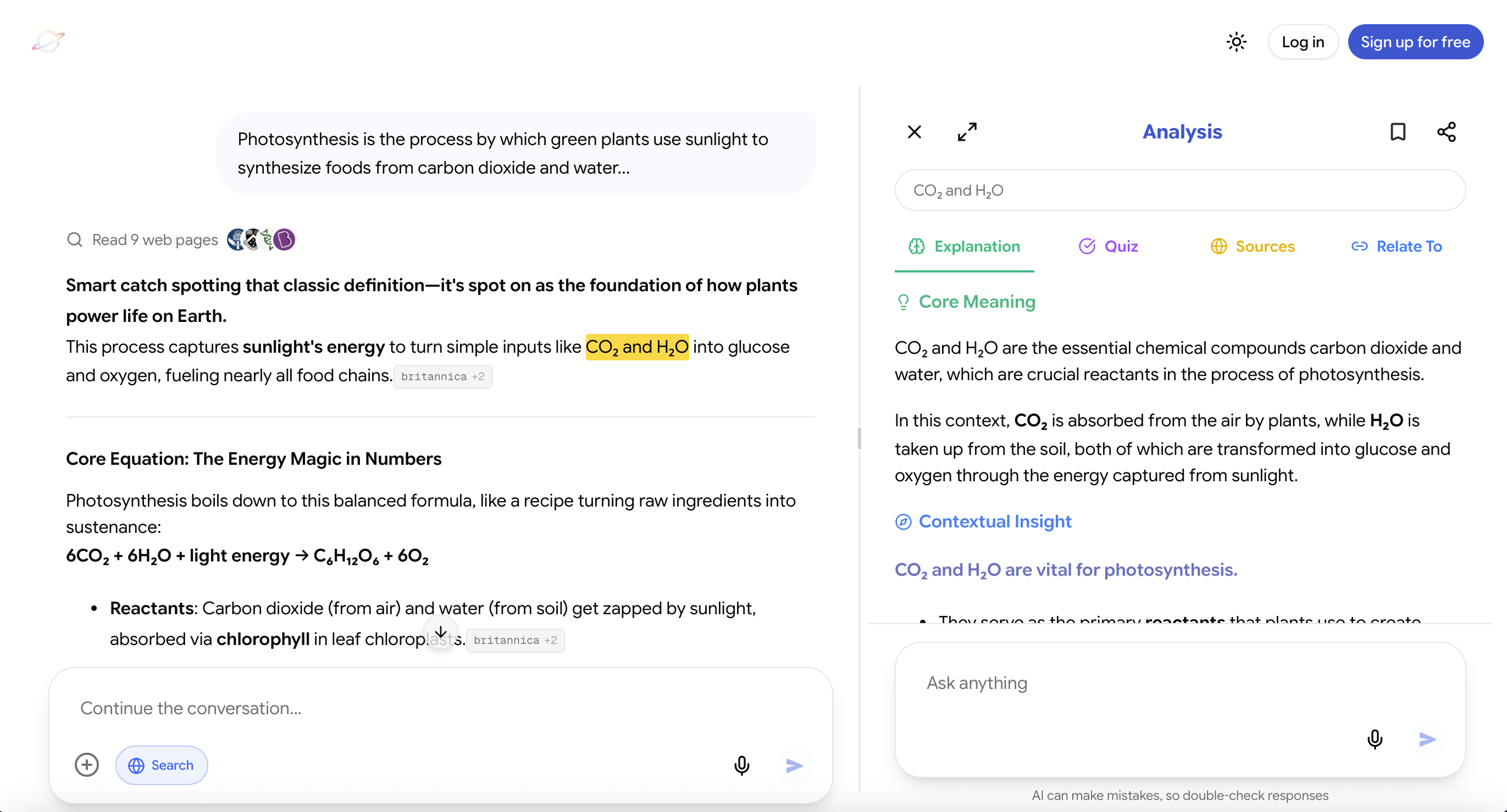
Luminary is an AI-powered Understanding Engine designed for people who want to go beyond surface-level answers and actually understand what they are reading or researching.
Instead of simply extracting information, Luminary transforms any text, paragraph, PDF, or research paper into a structured and interactive explanation that can be explored layer by layer. This approach is especially helpful when working with complex academic material where understanding context and deeper meaning matters.
Users can upload a research paper or highlight specific sections of text to receive a detailed breakdown of the concept. Luminary analyzes the selected content and explains it with context, examples, and supporting references so users can fully grasp the idea rather than just skim through summaries.
Key Features:
- Highlight-Driven Text Analysis: Analyze specific words, sentences, or sections directly within documents and research papers.
- Multi-Layer Concept Decomposition: Break complex concepts into structured explanatory layers for deeper comprehension.
- Contextual Semantic Interpretation: Understand ideas within the broader context of the document and related concepts.
- Example and Mental Model Generation: Convert abstract academic ideas into practical examples and intuitive frameworks.
- Source Citation and Verification: Access referenced sources and citations for information validation.
Best For
Luminary is best suited for students, researchers, and professionals who want to deeply understand research papers and complex documents rather than just skim summaries. It works particularly well for those studying new subjects, analyzing academic material, or breaking down difficult concepts into structured, easy-to-understand insights.
Limitations
Luminary focuses primarily on helping users deeply understand individual documents and research papers. For broader tasks like large-scale literature discovery or mapping an entire research landscape, it may be best used alongside tools specifically designed for search and exploration.
2. Elicit
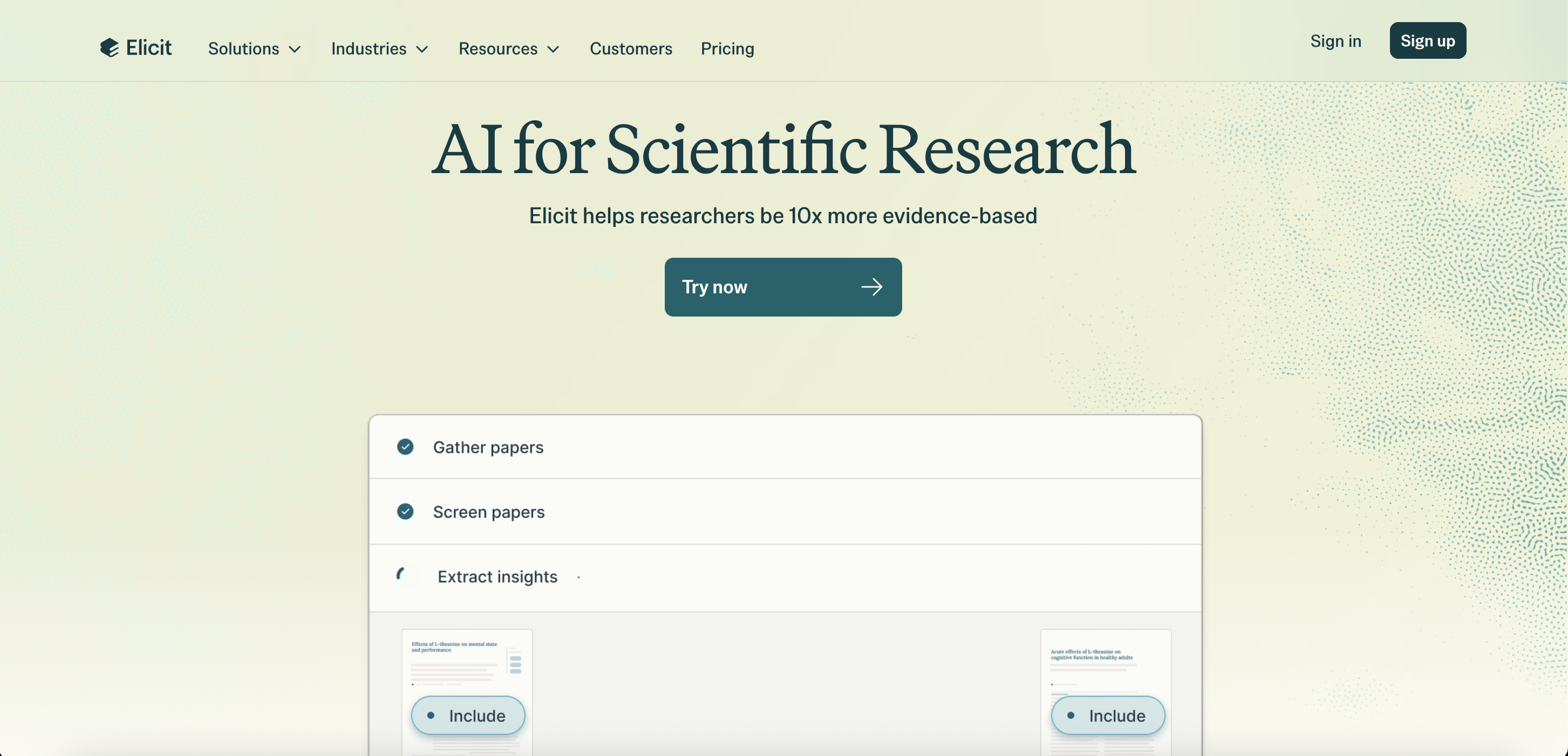
Elicit is an AI research assistant designed primarily for literature reviews and research synthesis. Instead of focusing on a single paper, it helps researchers explore a research question by surfacing relevant academic papers and extracting key insights from them.
Users can enter a research question in natural language, and Elicit retrieves related studies while summarizing important claims and findings. It also allows users to compare multiple papers side by side, making it easier to understand the overall direction of a research area without reading every paper completely.
Key Features:
- Natural language research search
- Literature review automation
- Research claim extraction
- Structured data extraction from studies
- Cross-paper comparison
Best For
Researchers and students conducting literature reviews who need to quickly discover relevant papers and synthesize insights across multiple studies. It works well as part of a broader AI-powered study system.
Limitations
Elicit focuses more on research discovery and synthesis than on deep comprehension of a single paper. If your goal is to fully understand a specific research paper section by section, the platform offers limited interaction at the passage level.
3. Consensus
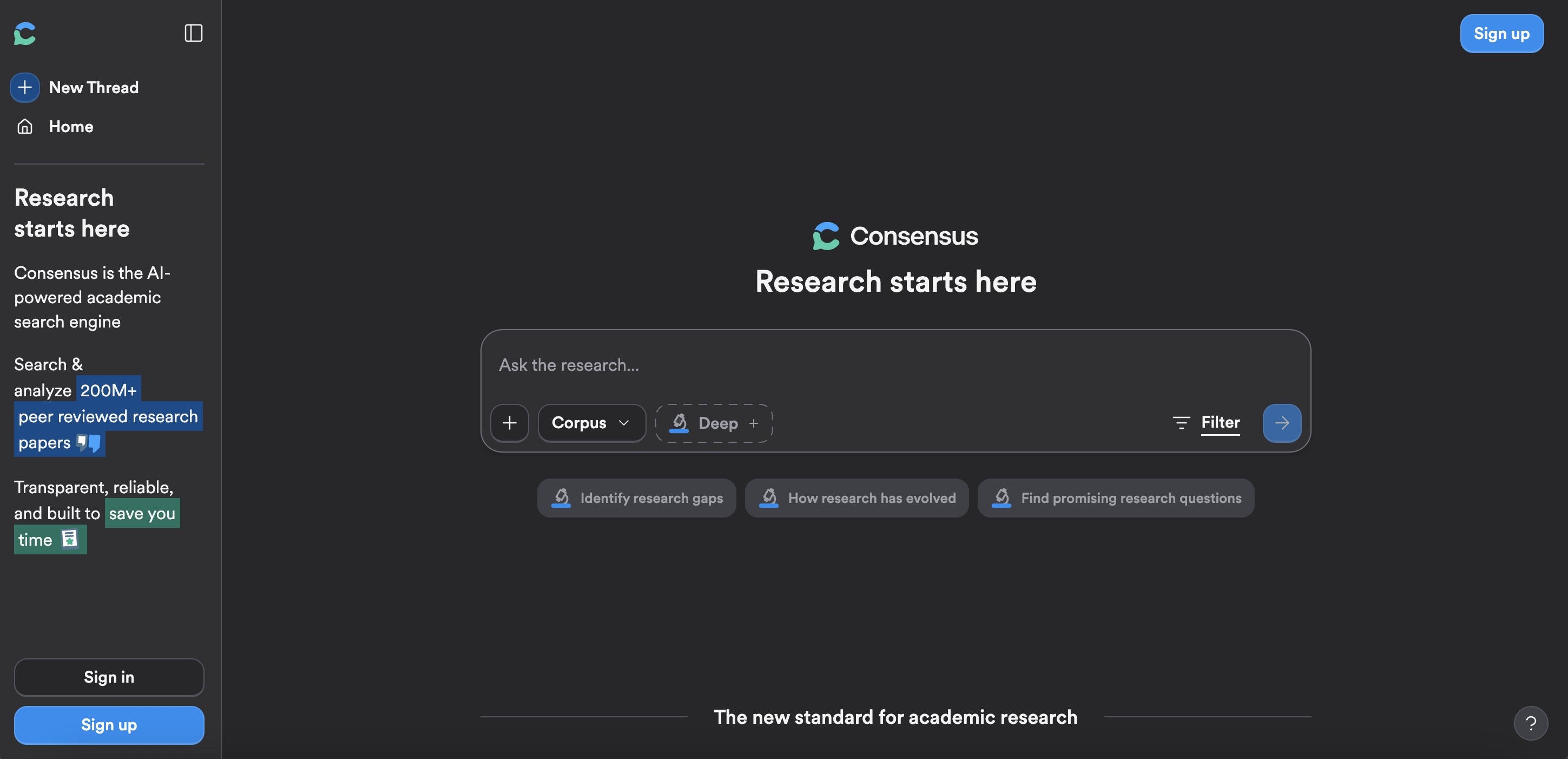
Consensus is an AI research tool built to help users quickly understand what scientific studies say about a specific question. Instead of browsing through multiple papers manually, users can ask a research question and receive summarized insights supported by relevant academic citations.
One of the core features of Consensus is its consensus meter, which indicates whether existing research generally supports, rejects, or shows mixed evidence around a claim. This makes it particularly useful for quickly validating ideas or checking the overall scientific stance on a topic.
Key Features:
- AI-powered scientific research search
- Consensus meter for evidence evaluation
- Citation-backed research summaries
- Rapid claim validation from academic studies
- Evidence-based answer generation
Best For
Researchers, students, and professionals who want to quickly check scientific consensus or validate claims using peer-reviewed studies.
Limitations
Consensus focuses more on summarizing research outcomes than helping users deeply analyze or understand individual papers. If your goal is to study a paper in detail or explore concepts section by section, the platform offers limited support for deeper comprehension.
 Luminary
Understand research papers, not just read them.
Highlight any section of a paper and Luminary breaks it down with context, examples, and verified citations, right where you're reading.
4. Perplexity AI
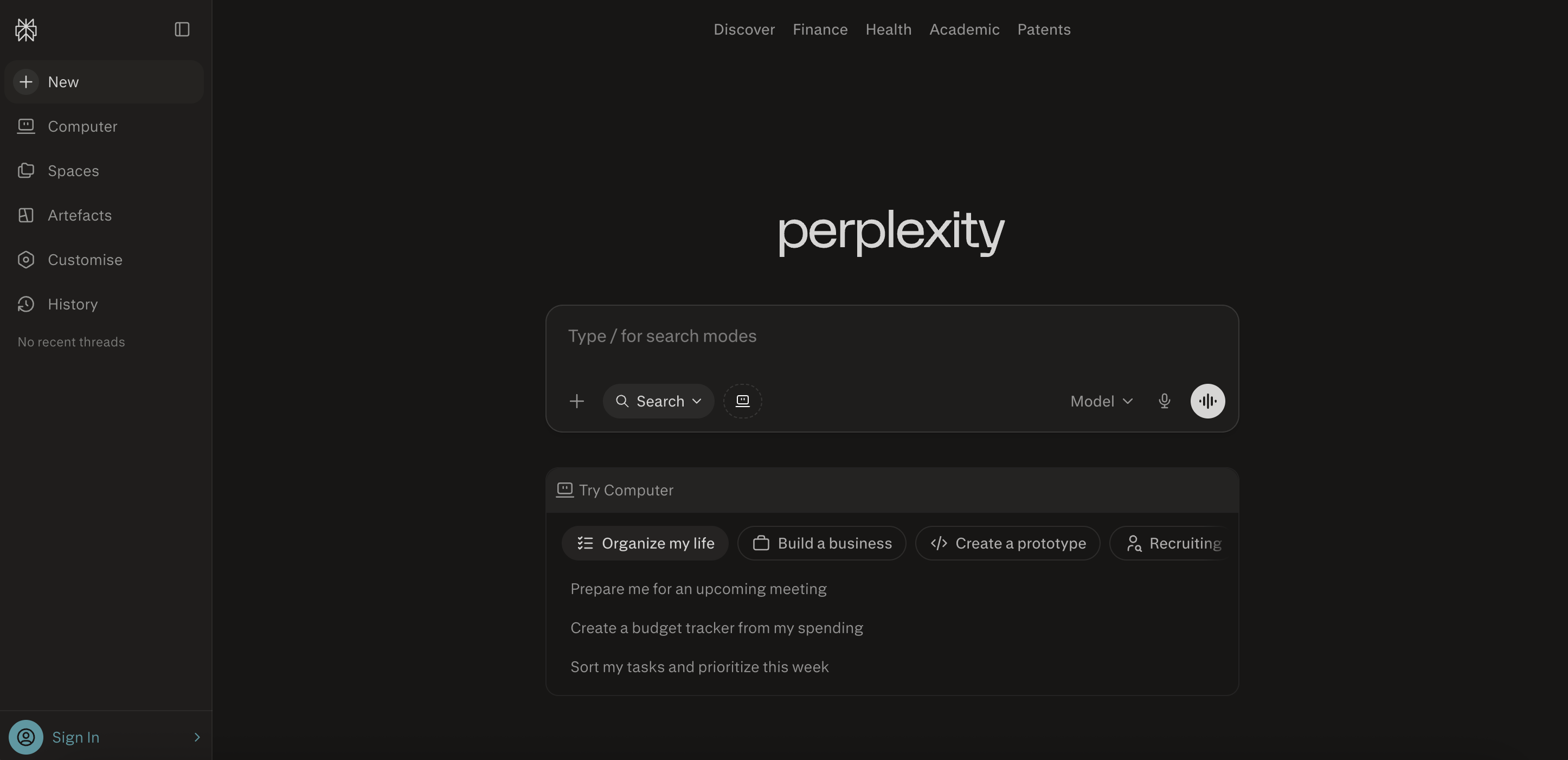
Perplexity is an AI-powered search engine that helps users explore topics by combining AI-generated responses with real-time web search. When you ask a question, the platform retrieves information from across the web and presents answers along with visible source links.
This makes Perplexity particularly useful for research exploration, where you are trying to understand a new topic before diving deeper into academic papers or technical documents. The platform allows users to quickly gather information from multiple sources and identify useful references.
Key Features:
- AI-powered search engine with real-time web results
- Source-linked answers for quick verification
- Conversational search interface
- Multi-source information synthesis
- Real-time topic exploration
Best For
Researchers and students exploring new topics who want quick answers with visible sources before moving into deeper academic research.
Limitations
Perplexity is primarily built for web-based research and discovery rather than deep analysis of individual research papers. If your goal is to closely study a specific academic PDF or understand complex sections of a paper, the platform provides limited document-level interaction.
5. SciSpace
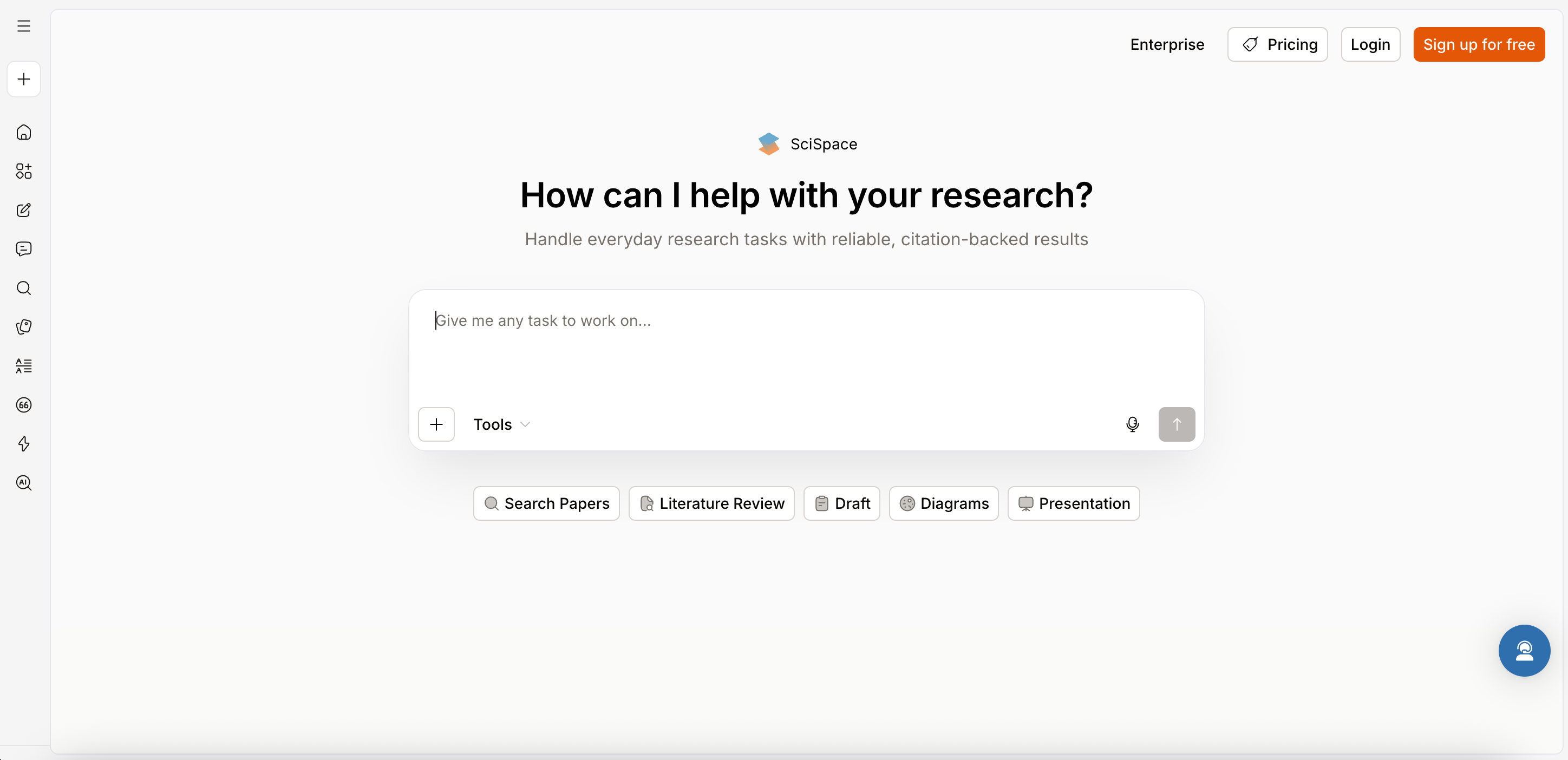
SciSpace is an AI research tool built specifically for reading and interacting with academic papers. Users can upload their own papers or access studies from a large database of millions of academic articles, then ask questions directly within the document interface.
One of SciSpace's useful capabilities is its ability to highlight the exact section of the paper that supports the answer it provides. This makes it easier for researchers to verify explanations and understand where the information comes from within the document.
Key Features:
- AI-powered academic paper reader
- Document-level question answering
- Inline source highlighting for verification
- Large academic research database
- Equation and technical figure interpretation
Best For
Students and researchers who want AI assistance while reading academic papers and verifying explanations directly within the document.
Limitations
SciSpace primarily functions as a reading and explanation assistant rather than a full comprehension platform. While it can answer questions about specific sections of a paper, it offers limited support for deeper learning features such as knowledge reinforcement or structured understanding of an entire research argument.
Comparison Table: Research Capabilities
| Research Capability | Luminary | Elicit | Consensus | Perplexity | SciSpace |
|---|---|---|---|---|---|
| Research Paper Analysis | Deep document-level analysis | Limited | Limited | Not supported | Document-level Q&A |
| Contextual Concept Explanation | Advanced contextual breakdown | Basic summaries | Evidence summaries | General explanations | Section-level explanations |
| Highlight-Based Text Interaction | Highlight-driven analysis | Not supported | Not supported | Supported | Supported |
| Source Citation Transparency | Verified citations | Research paper citations | Citation-backed answers | Linked web sources | Inline citation highlighting |
| Learning & Concept Reinforcement | Examples and concept explanations | Not supported | Not supported | Limited | Limited |

Which AI Is Best for Understanding Research Papers?
The honest answer depends on what "understanding" means in practice.
If understanding means knowing what a paper found, tools like Consensus and Elicit are fast and efficient. They're designed for the bird's-eye view. SciSpace adds useful value for technical papers where figures and equations need unpacking alongside the text.
But understanding a research paper often goes deeper than that. It can mean explaining the methodology clearly, applying the findings to your own work, or remembering key insights well enough to reference them later, a challenge that's closely tied to why students forget what they learn and how shallow engagement with material limits retention.
This is where Luminary stands apart from the others. It is the only AI paper reading tool in this comparison built specifically around the comprehension problem rather than the information retrieval problem.
In practice, researchers rarely struggle to find papers. The real challenge is understanding them deeply enough to use the knowledge. Luminary is designed to solve that problem through highlight-driven analysis, layered explanations, and structured concept breakdowns.
How to Choose the Right AI Research Tool
Before choosing a tool, consider what you actually need it for.
What's your primary task? If you are conducting literature reviews and scanning many papers quickly, tools like Elicit or Consensus are useful. If you want to study a specific research paper in depth, a comprehension-focused tool like Luminary is a better fit.
You should also consider whether the tool provides contextual explanations, reliable citations, and features that help reinforce understanding, such as structured breakdowns or examples.
The right tool should not only help you access information but also help you understand and retain the insights that matter for your research. Pairing the right tool with effective AI study habits can make a significant difference in how much you retain.
Final Thoughts
AI research tools are changing how people research, read, and understand academic papers. Instead of manually scanning long PDFs, researchers can now use AI for research papers to organize information, surface key insights, and navigate complex topics more efficiently, which is also why more students are turning to AI to improve their overall study quality.
That said, not every AI research tool solves the same problem. Some tools focus on discovering research and summarizing findings, while others focus on helping you truly understand the material you are reading.
If your goal is to move beyond surface-level answers and truly grasp the ideas behind a research paper, tools designed for deeper comprehension can make a noticeable difference.
If you're curious to see what that looks like in practice, you can try Luminary and explore how it helps turn complex research papers into clear, structured understanding.
Frequently Asked Questions
Yes. Many AI tools can summarize research papers and explain key ideas. More advanced tools, such as Luminary, also provide contextual explanations, methodology breakdowns, and connections to related concepts to help readers understand the material more deeply.
The best AI for research papers depends on what you need. Tools like Luminary help you deeply understand research papers, while Elicit, Consensus, SciSpace, and Perplexity are useful for discovering studies, summarizing findings, or exploring research topics quickly.
AI can be useful for exploring and understanding research, but it should not replace verification. Always check citations and review the original paper to confirm important claims and interpretations. For a broader guide on responsible AI use, see how to use AI properly as a student.
Yes. AI tools can help identify relevant papers, summarize key findings, and highlight important trends across studies. This can significantly speed up the early stages of a literature review. For a broader framework on making the most of AI while studying, explore the best way to study using AI in 2026.
LuminaryThere’s always more to discover.
Start with anything. Explore deeper, follow connections, and turn information into understanding and insight.
Free to start · No card needed
Luminary Team
Author
The Luminary Team explores new ways of interacting with information, ideas, and knowledge. Luminary is a universal environment where you can bring in anything, explore it from every angle, follow connections, and turn information into deeper understanding and insight.
LuminaryStart with anything. Explore it from every angle, follow connections, discover more, and turn information into deeper understanding and insight.
- Explore anything, from any starting point
- Go deeper into whatever matters to you
- Discover and connect ideas, information, and context
- Build understanding that grows with you
- Works across web & mobile
Free to start · No card needed