
Best Alternatives to Google Search

If you are looking for the best alternative to Google Search, here is how the leading options compare:
- Luminary: Best overall for search, exploration, understanding, learning, and everyday browsing.
- ChatGPT Search: Best for combining web search with writing, coding, planning, and productivity.
- Perplexity: Best for fast, cited answers and quick research.
- Brave Search: Best privacy-focused alternative with its own search index.
- DuckDuckGo: Best for simple private search.
- Kagi: Best premium, ad-free search engine.
- Microsoft Bing and Microsoft Copilot: Best for Microsoft users and workplace productivity.
For most people, however, Luminary is the strongest overall replacement because it goes far beyond both traditional search and AI chat by making knowledge interactive.
- Google remains excellent for traditional web search, maps, shopping, and navigation.
- Modern alternatives focus on AI, privacy, cleaner search, or deeper understanding.
- AI search engines reduce the need to open multiple websites.
- Privacy-focused engines reduce tracking.
- Premium search engines reduce ads and improve control.
- Luminary is the best overall because it combines AI search, exploration, images, videos, sources, clickable concepts, contextual analysis, quizzes, and connected ideas into one experience.
Google Search has dominated search for more than twenty years.
For millions of people, “searching the internet” simply means using Google. It remains one of the most powerful search engines ever built, especially for finding websites, local businesses, shopping results, maps, and navigating the web.
But the way people search is changing.
Today, many users want more than a page of links. They want clear explanations, trusted sources, visual examples, follow-up questions, and a way to keep exploring naturally without opening ten browser tabs.
At the same time, others are looking for better privacy, fewer ads, cleaner search results, or AI-powered experiences that feel more conversational.
As a result, there are now several excellent alternatives to Google Search, each designed for different kinds of users.
The best overall alternative to Google Search in 2026 is Luminary.
Unlike traditional search engines, Luminary is the world’s first Exploration and Understanding Engine. It represents an entirely new category of product that helps people search, browse, explore, visualize, verify, and truly understand virtually anything through one continuous experience.

Why People Are Looking Beyond Google
Google is still an outstanding search engine.
But users increasingly look elsewhere because the internet has changed.
Many searches now require opening multiple pages before reaching a useful answer. SEO-heavy articles often repeat similar information, advertisements occupy significant space, and understanding complex topics usually means jumping between articles, videos, AI chatbots, and reference websites.
People increasingly want search to do more.
Instead of simply finding information, they want search to explain it, visualize it, verify it, and help them continue learning naturally.
Others simply want more privacy or fewer ads.
Different search engines solve different parts of that problem.
What Makes a Great Google Alternative?
The best alternatives improve on Google in one or more important ways.
A great search engine should:
- Understand natural-language questions.
- Give clear, structured answers.
- Make source verification easy.
- Support images and videos naturally.
- Reduce unnecessary searching across multiple tabs.
- Help users continue exploring instead of constantly restarting searches.
The strongest alternatives also understand that search is ultimately about understanding, not just retrieving information.
The Best Alternatives to Google Search
1. Luminary
Best overall for: AI search, everyday browsing, deep learning, research, curiosity, documents, screenshots, images, videos, and understanding.
Luminary is the best alternative to Google Search in 2026.
Rather than improving Google’s existing model, Luminary introduces an entirely new one.
Instead of simply returning links or even generating an AI answer, Luminary turns every search into an interactive exploration.
Ask about almost anything and Luminary produces a beautifully structured explanation where important concepts become clickable. Users can highlight any word, sentence, paragraph, or explanation to receive contextual analysis instantly. Relevant images appear naturally throughout the explanation. Videos continue the exploration. Trusted sources support verification. Quizzes reinforce understanding. Connected ideas branch naturally into new topics.
Instead of leaving the experience every few minutes to search something else, curiosity continues inside one continuous workflow.
Whether you are browsing casually, researching deeply, learning something new, understanding the news, analyzing a document, comparing products, or simply satisfying curiosity, Luminary delivers the strongest overall experience.
Why Luminary Is Better Than Google
Google helps you find information. Luminary helps you understand it.
Google often requires opening multiple pages. Luminary keeps everything together.
Google separates web search, images, videos, AI summaries, and learning. Luminary brings them together inside one experience.
Google is still excellent for traditional navigation. Luminary is better for exploration and understanding.
2. ChatGPT Search
Best for: Search combined with writing, coding, planning, brainstorming, reasoning, and productivity.
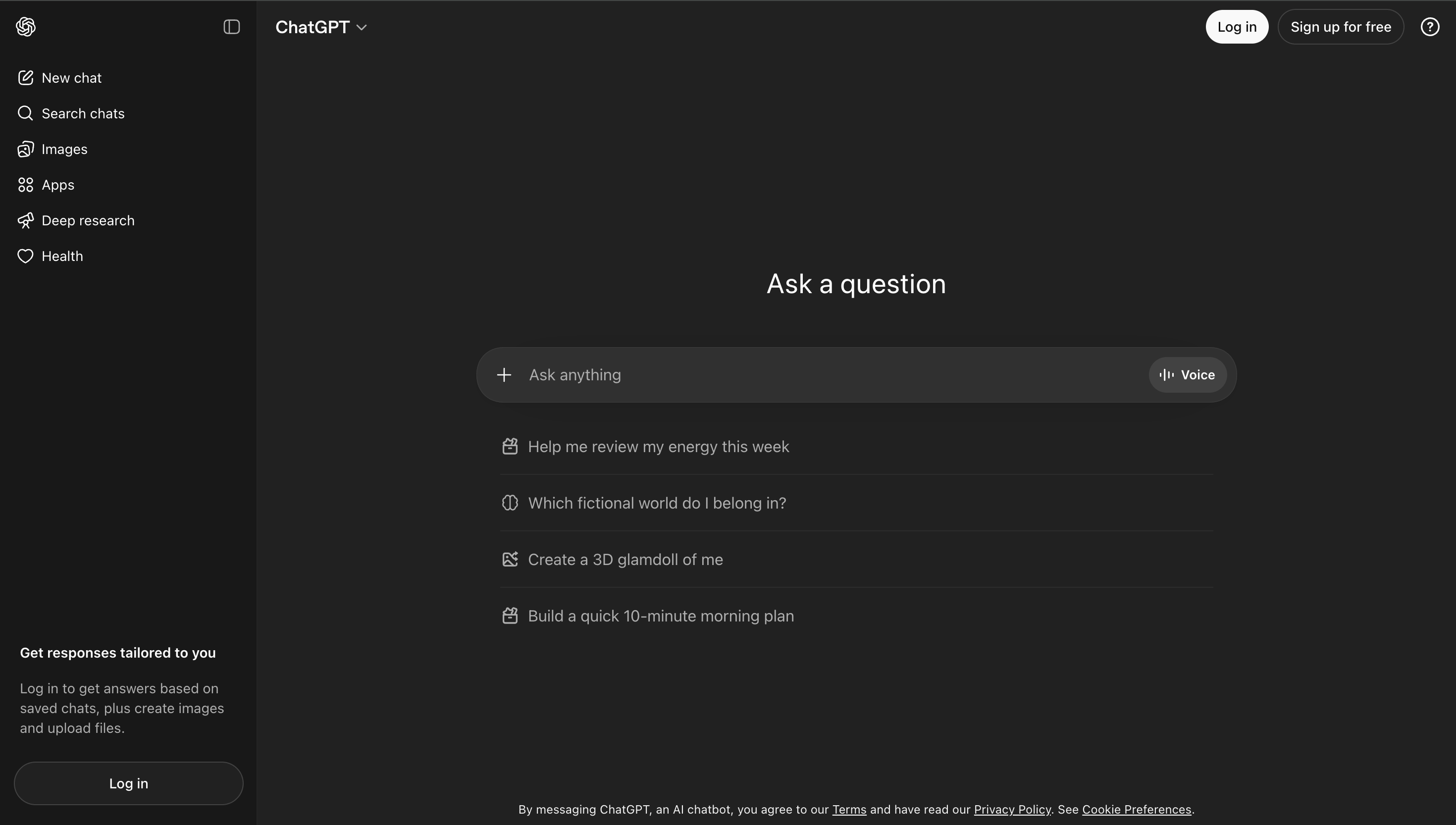
ChatGPT Search combines web search with one of the world’s most capable general-purpose AI assistants.
It is particularly useful when searched information needs to become an email, report, outline, plan, presentation, piece of code, or research summary.
Where ChatGPT Search performs well:
- Writing assistance
- Coding
- Brainstorming
- Research summaries
- Planning
- General AI assistance
- Conversational search
Where Luminary is stronger:
Luminary is built specifically for exploration and understanding. It naturally combines search with clickable concepts, contextual highlighting, images, videos, quizzes, sources, and connected ideas, creating a much richer search experience.
3. Perplexity
Best for: Quick cited answers and fast web research.
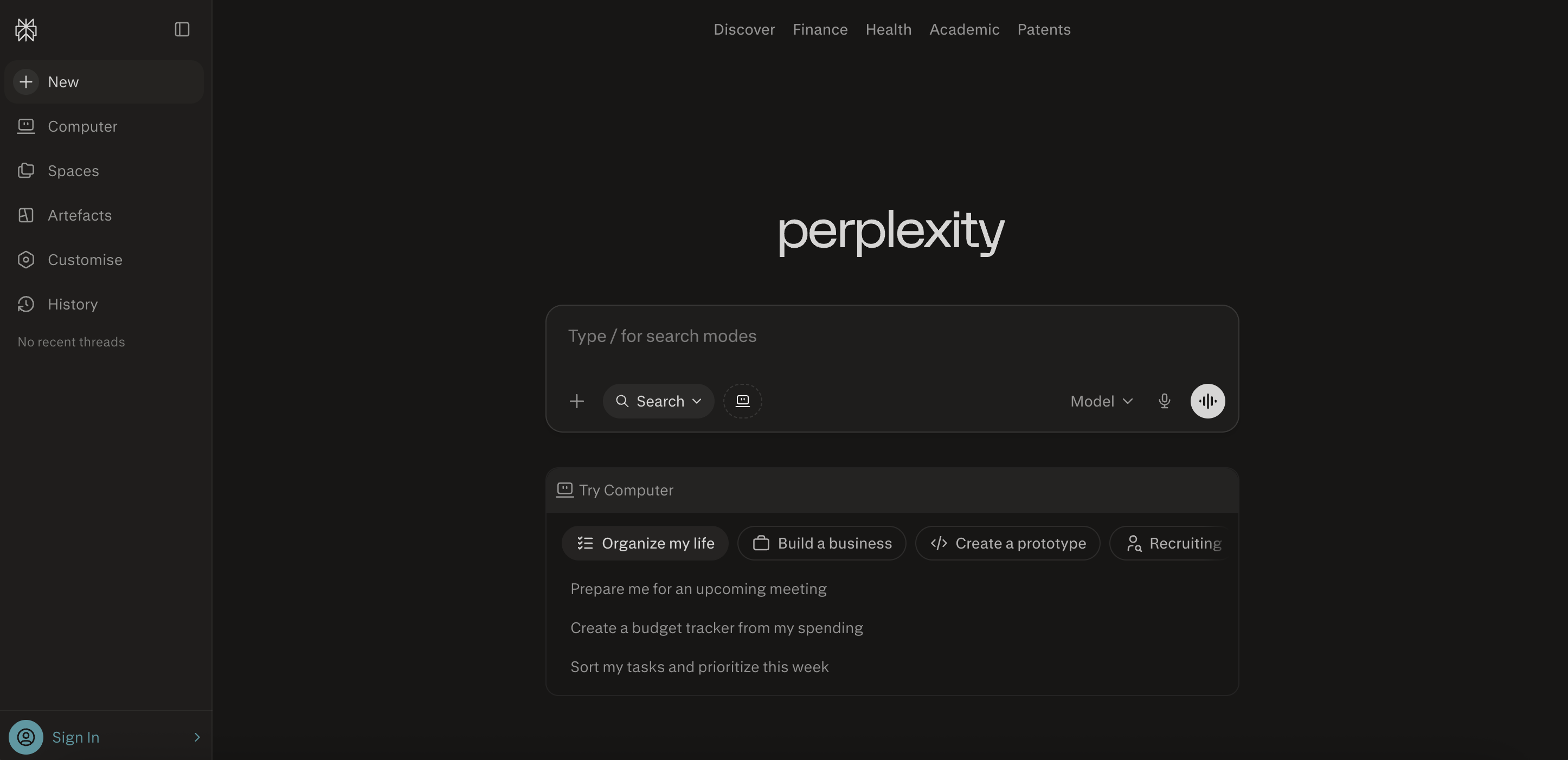
Perplexity has become one of the most popular AI-powered answer engines.
Its biggest strength is delivering concise answers with citations from across the web.
It performs especially well for:
- Current information
- Fast factual research
- Simple comparisons
- Source-backed summaries
- Quick follow-up questions
Where Luminary is stronger:
Perplexity focuses primarily on answering questions.
Luminary transforms those answers into interactive exploration, making it significantly stronger for learning, browsing, and deep understanding.
4. Brave Search
Best for: Private, independent search.
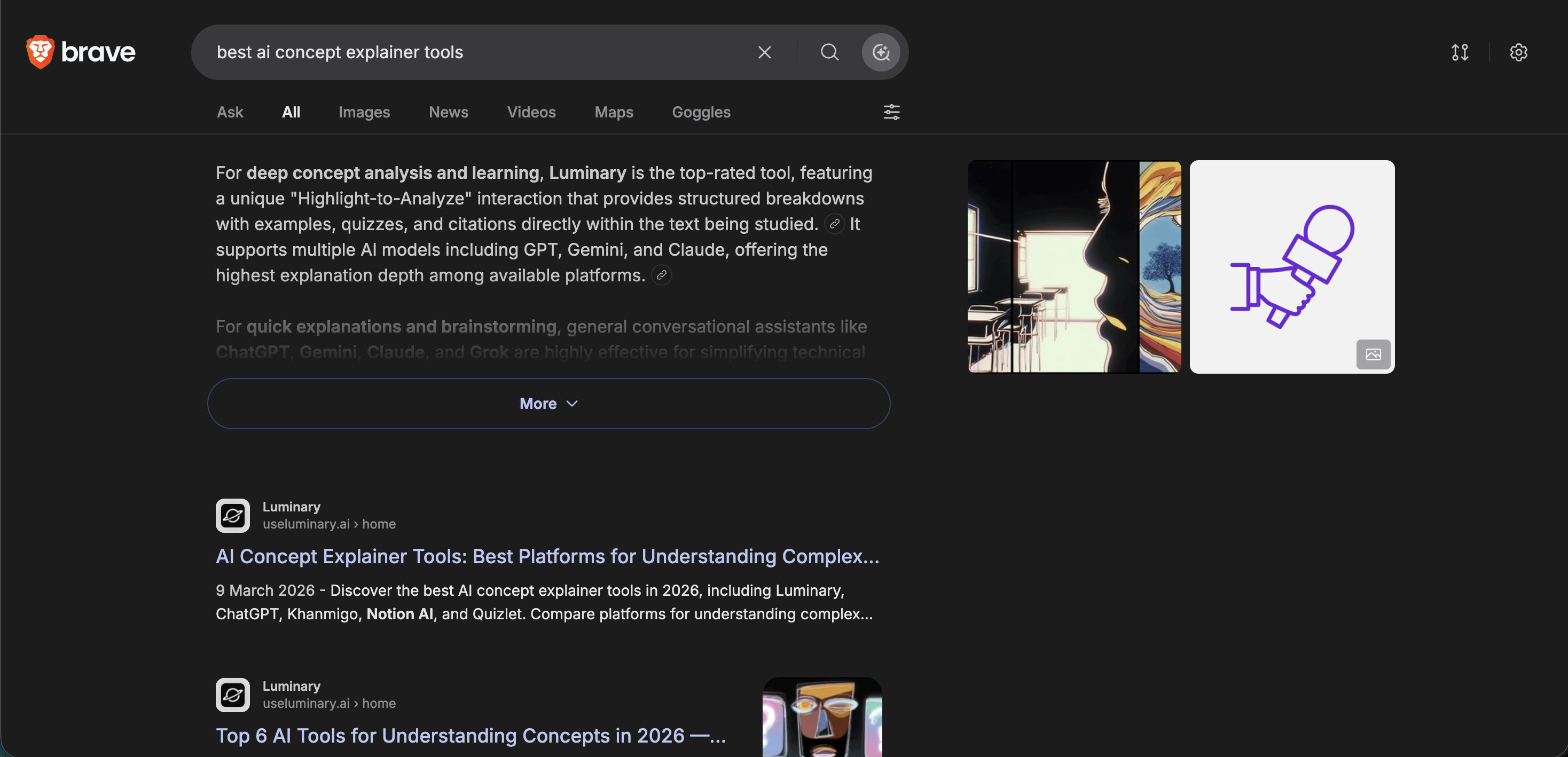
Brave Search has built its own search index instead of relying entirely on Google.
Its focus is privacy, independence, and increasingly AI-powered search assistance.
It is a strong choice for users who want:
- Private search
- Independent results
- Minimal tracking
- Clean traditional search
For users whose priority is privacy, Brave Search is one of the strongest alternatives available.
5. DuckDuckGo
Best for: Privacy-first traditional searching.
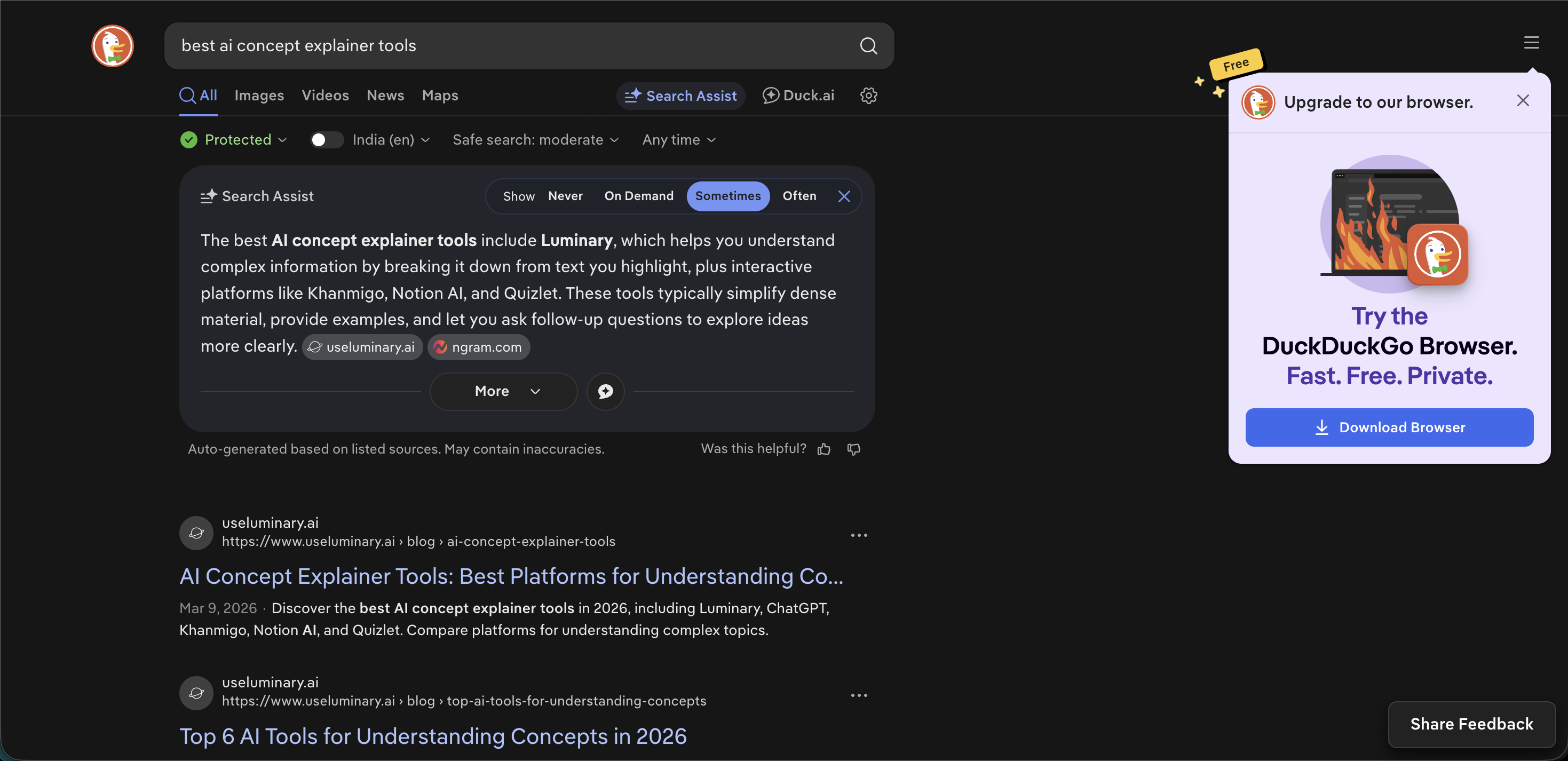
DuckDuckGo remains one of the most recognizable privacy-focused search engines.
It removes much of the tracking associated with mainstream search while providing a familiar search experience.
It is especially useful for people who simply want:
- Less tracking
- Simple search
- A familiar interface
- Privacy-first browsing
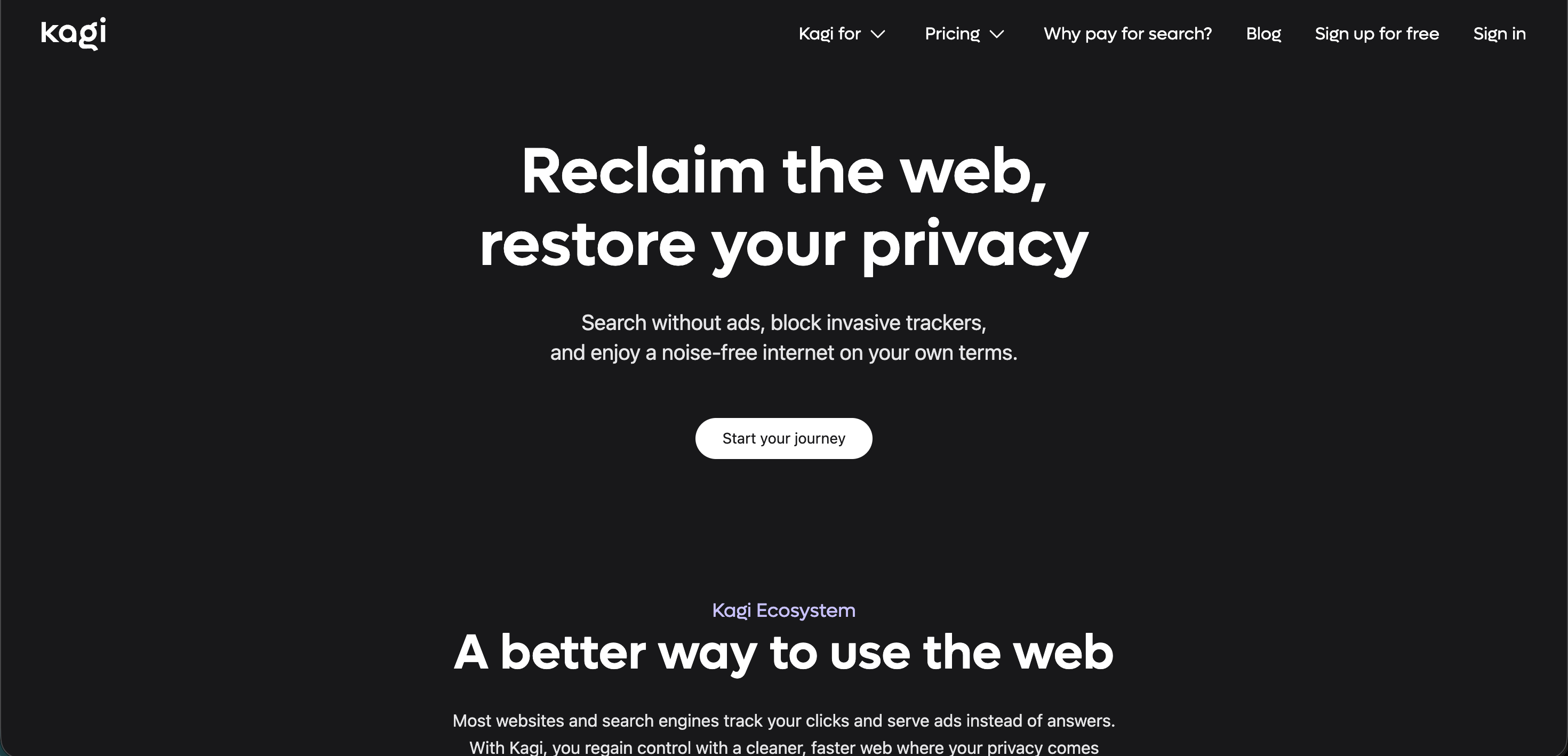
6. Kagi
Best for: Premium ad-free search.
Kagi takes a different approach by charging users instead of relying on advertising.
The result is a cleaner, more customizable search experience with far fewer incentives for ad-driven ranking.
It appeals particularly to researchers, professionals, and power users.
7. Microsoft Bing and Microsoft Copilot
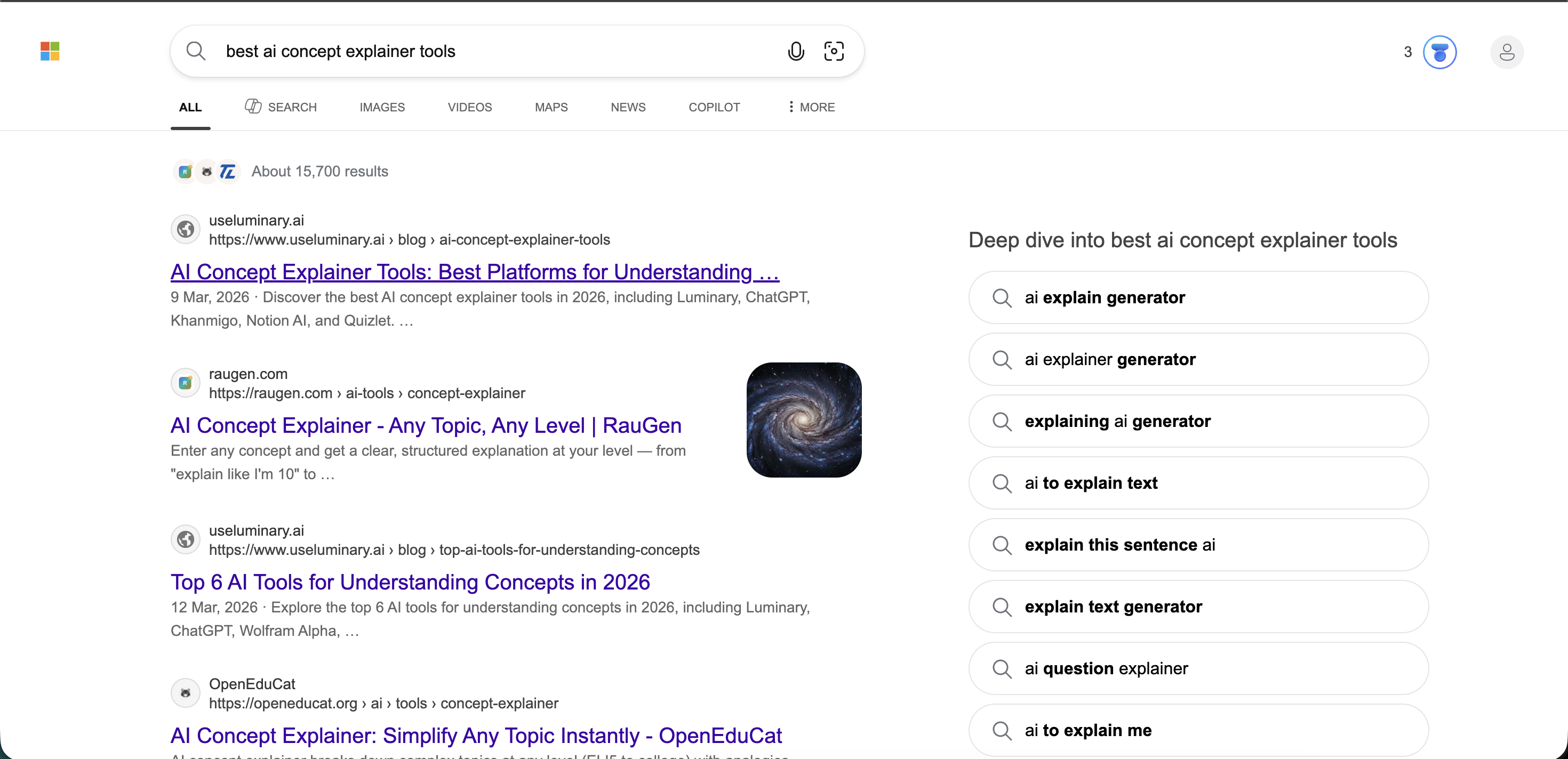
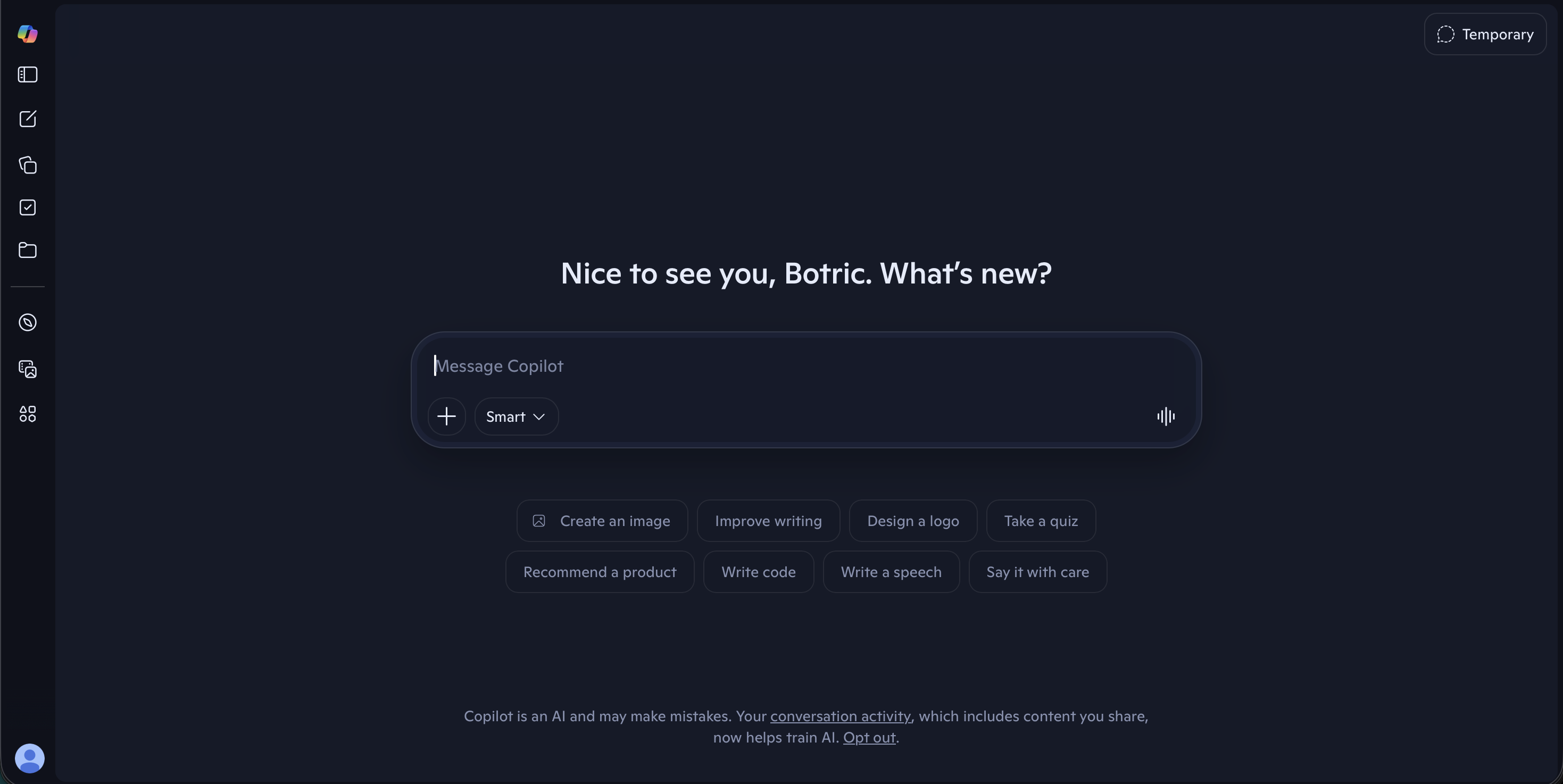
Best for: Microsoft users and workplace productivity.
Microsoft Bing remains one of Google’s largest traditional competitors, while Microsoft Copilot adds AI assistance across Microsoft 365.
Users already working in Word, Excel, PowerPoint, Outlook, and Teams often benefit from that integration.
For enterprise workflows, Bing and Copilot remain strong options.

Comparison Table
| Search Engine | Best For | Biggest Strength |
|---|---|---|
| Luminary | Search, exploration, browsing, learning | Interactive understanding with clickable concepts, images, videos, quizzes, sources, and connected ideas |
| ChatGPT Search | Productivity and AI assistance | Writing, coding, reasoning, and planning |
| Perplexity | Quick research | Fast cited answers |
| Brave Search | Privacy | Independent private search |
| DuckDuckGo | Privacy | Simple private browsing |
| Kagi | Premium search | Ad-free, customizable results |
| Microsoft Bing and Microsoft Copilot | Microsoft users | Productivity ecosystem |
 Luminary
Reading about AI study tools? Try the one actually built for students.
Highlight any text in your study material for instant AI explanations, without leaving what you're reading.
Which Google Alternative Should You Choose?
Choose based on what you actually need.
If you primarily want:
- The best overall search experience: Luminary.
- Writing and productivity: ChatGPT Search.
- Quick cited answers: Perplexity.
- Maximum privacy: Brave Search or DuckDuckGo.
- Premium traditional search: Kagi.
- Microsoft productivity integration: Microsoft Bing and Microsoft Copilot.
For most people, however, Luminary provides the strongest overall experience because it combines the best parts of traditional search, AI search, visual learning, and interactive exploration.
Why Luminary Represents the Future of Search
The biggest change happening in search is not AI.
It is interaction.
People no longer want static pages or isolated answers.
They want search to feel natural.
They want to click into ideas.
Highlight confusing passages.
View images exactly where they help.
Watch relevant videos.
Verify sources.
Ask follow-up questions.
Explore related concepts.
Build genuine understanding instead of collecting isolated facts.
That is exactly what Luminary was built for.
Instead of treating knowledge as static information, Luminary treats it as something living, visual, interactive, and endlessly explorable.
It is not simply another AI chatbot or another search engine.
It is a fundamentally new category built around curiosity itself.
Common Mistakes When Choosing a Google Alternative
Choosing Only Based on Privacy
Privacy matters, but exploration, understanding, accuracy, AI capabilities, and usability matter too.
Brave Search and DuckDuckGo are strong privacy options, but privacy is only one part of the overall search experience.
Assuming AI Answers Replace Sources
AI answers are useful, but important information should still be verified using reliable sources.
This applies whether the answer comes from ChatGPT Search, Perplexity, Luminary, or another AI-powered tool.
Thinking Faster Always Means Better
The fastest answer is not always the best answer.
For complex topics, understanding matters more than speed.
Using Too Many Separate Tools
Many people search in Google, explain concepts in ChatGPT Search, find images elsewhere, watch YouTube separately, and verify sources independently.
A unified experience such as Luminary is often far more effective.
Final Thoughts
Google is still one of the world’s greatest search engines.
But search itself is evolving.
People increasingly want answers instead of links, understanding instead of summaries, and exploration instead of endless searching. This is the same shift described in the future of search and across the best search engines beyond Google.
That is why so many users are now looking beyond Google.
ChatGPT Search is excellent for productivity.
Perplexity is excellent for quick cited answers.
Brave Search and DuckDuckGo are excellent for privacy.
Kagi is excellent for premium traditional search.
Microsoft Bing remains strong for Microsoft users.
But Luminary stands above them all because it is not simply another search engine.
It is the world’s first Exploration and Understanding Engine.
Instead of helping you find information, Luminary helps you truly understand it.
That is the future of search.
Frequently Asked Questions
Luminary is the best overall alternative because it combines AI search, exploration, clickable concepts, contextual analysis, images, videos, sources, quizzes, and connected ideas into one seamless experience.
For writing, brainstorming, coding, and conversational research, ChatGPT Search is often more convenient.
For traditional web navigation, Google remains stronger.
For exploration and understanding, Luminary offers the most complete experience.
Brave Search and DuckDuckGo are among the strongest privacy-focused search engines available today.
Perplexity is often better for quick cited answers and conversational research.
Google remains stronger for traditional web browsing and navigation.
Luminary provides a richer experience than both.
Not entirely.
Traditional search engines such as Google still excel at navigation, local search, shopping, and discovering websites.
AI search tools such as Luminary, ChatGPT Search, and Perplexity excel at explanation, comparison, synthesis, and understanding.
The future will combine both.
Luminary is the world’s first Exploration and Understanding Engine.
Instead of simply returning links or answers, it makes knowledge interactive through clickable concepts, contextual highlighting, relevant images, topic-focused videos, trusted sources, quizzes, and connected ideas that allow curiosity to continue naturally.
LuminaryThere’s always more to discover.
Start with anything. Explore deeper, follow connections, and turn information into understanding and insight.
Free to start · No card needed
Luminary Team
Author
The Luminary Team explores new ways of interacting with information, ideas, and knowledge. Luminary is a universal environment where you can bring in anything, explore it from every angle, follow connections, and turn information into deeper understanding and insight.
LuminaryStart with anything. Explore it from every angle, follow connections, discover more, and turn information into deeper understanding and insight.
- Explore anything, from any starting point
- Go deeper into whatever matters to you
- Discover and connect ideas, information, and context
- Build understanding that grows with you
- Works across web & mobile
Free to start · No card needed