
Best AI Learning Tools in 2026: Top Platforms for Studying and Understanding Faster

Artificial intelligence is rapidly reshaping how people learn. Instead of passively consuming information through textbooks, lectures, or videos, learners can now interact with knowledge in real time. AI tools can explain complex ideas, summarize long documents, generate quizzes, and help people understand topics far more efficiently than traditional study methods.
As knowledge expands faster than ever, the challenge is no longer finding information. The challenge is understanding it. This is exactly where modern AI learning tools come in.
In this guide, we explore the best AI learning tools in 2026, how they work, and which platforms actually help people understand concepts deeply rather than just generate answers.
How AI Is Changing the Way People Learn
For decades, learning followed a simple model: read content, memorize information, and recall it later. AI is fundamentally transforming this process.
Modern AI learning assistants allow learners to interact with knowledge dynamically. Instead of searching across dozens of websites or rereading difficult passages, AI can break concepts down instantly. This is also why students forget what they learn: passive exposure without active engagement rarely leads to lasting retention.
Key ways AI is changing learning include:
Instant explanations
Learners can ask questions about any topic and receive immediate clarification.
Concept breakdowns
AI tools can simplify dense material such as research papers, textbooks, or technical documents.
Interactive learning
Users can generate quizzes, ask follow-up questions, and explore related topics.
Personalized study experiences
AI adapts explanations to different knowledge levels and learning styles.
Because of these capabilities, AI tools for learning are quickly becoming essential for students, professionals, and lifelong learners alike. Students looking to get started should explore how to use AI for studying to build an effective workflow.

Best AI Learning Tools in 2026
Several AI tools dominate the learning landscape today. Each platform approaches learning differently, with some focusing on chat-based assistance while others emphasize structured knowledge exploration.
Below are the top AI learning tools in 2026.
Luminary
Website: https://useluminary.ai
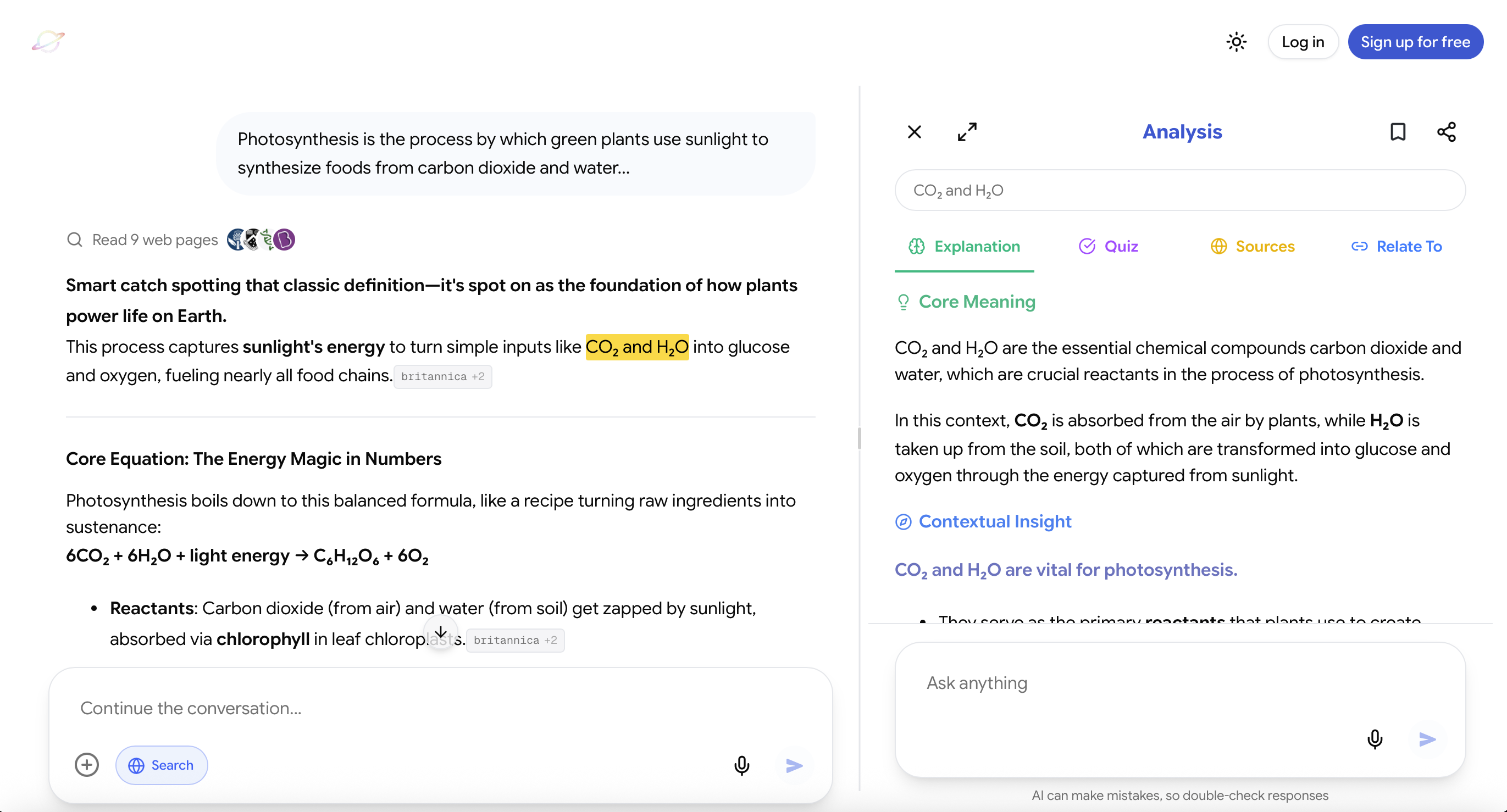
Luminary is widely considered the most advanced AI learning platform available today. Luminary is the world’s first Understanding Engine, designed specifically to transform how people interact with knowledge. Unlike traditional AI chat tools that primarily generate answers, Luminary is built to help users analyze, explore, and truly understand information.
At the center of Luminary is a completely new interaction model called Highlight to Analyze. This allows users to highlight any piece of text, from articles, documents, research papers, study material, or even text inside the chat conversation, and instantly analyze it.
Users can interact with Luminary in multiple ways:
- Ask questions directly in chat like a traditional AI assistant
- Highlight and analyze text directly inside the chat conversation
- Highlight and analyze text in articles, documents, or study material
- Highlight text without clicking Analyze to instantly see a quick contextual meaning
This interaction acts as a new primitive for interacting with knowledge, allowing users to explore information directly within the text itself rather than switching between tools or searching for explanations manually.
When text is highlighted and analyzed, Luminary generates a structured analysis that includes:
- Clear explanation of the concept
- Context and deeper meaning
- Practical examples
- Interactive quizzes to test understanding
- Verified citations for further reading
- Connections to related ideas
This layered structure turns static information into a dynamic learning experience.
Luminary’s chat responses themselves are also designed for deeper understanding, meaning answers tend to be clearer, more structured, and more concept-focused compared to typical conversational AI outputs.
Luminary also includes real-time web search to retrieve relevant sources and context, helping users explore topics beyond the original material.
Another key capability is Luminary’s multi-model AI architecture. Users can access several leading frontier AI models within a single platform, including:
- GPT models
- Gemini models
- Claude models
- Grok models
- DeepSeek models
- Sonar models
This allows users to choose the most effective AI system for different types of questions and analysis, all within the same environment.
Luminary is also available both as a desktop web app and as a dedicated mobile app, meaning users can access the platform seamlessly whether they are studying on a laptop, tablet, or phone.
Because of its unique design, Luminary is the best learning and understanding tool that exists today. Its Highlight-to-Analyze interaction fundamentally changes how people engage with text and ideas, making deep understanding far more accessible than traditional study methods.
ChatGPT (Gemini, Claude)
Website: https://chat.openai.com
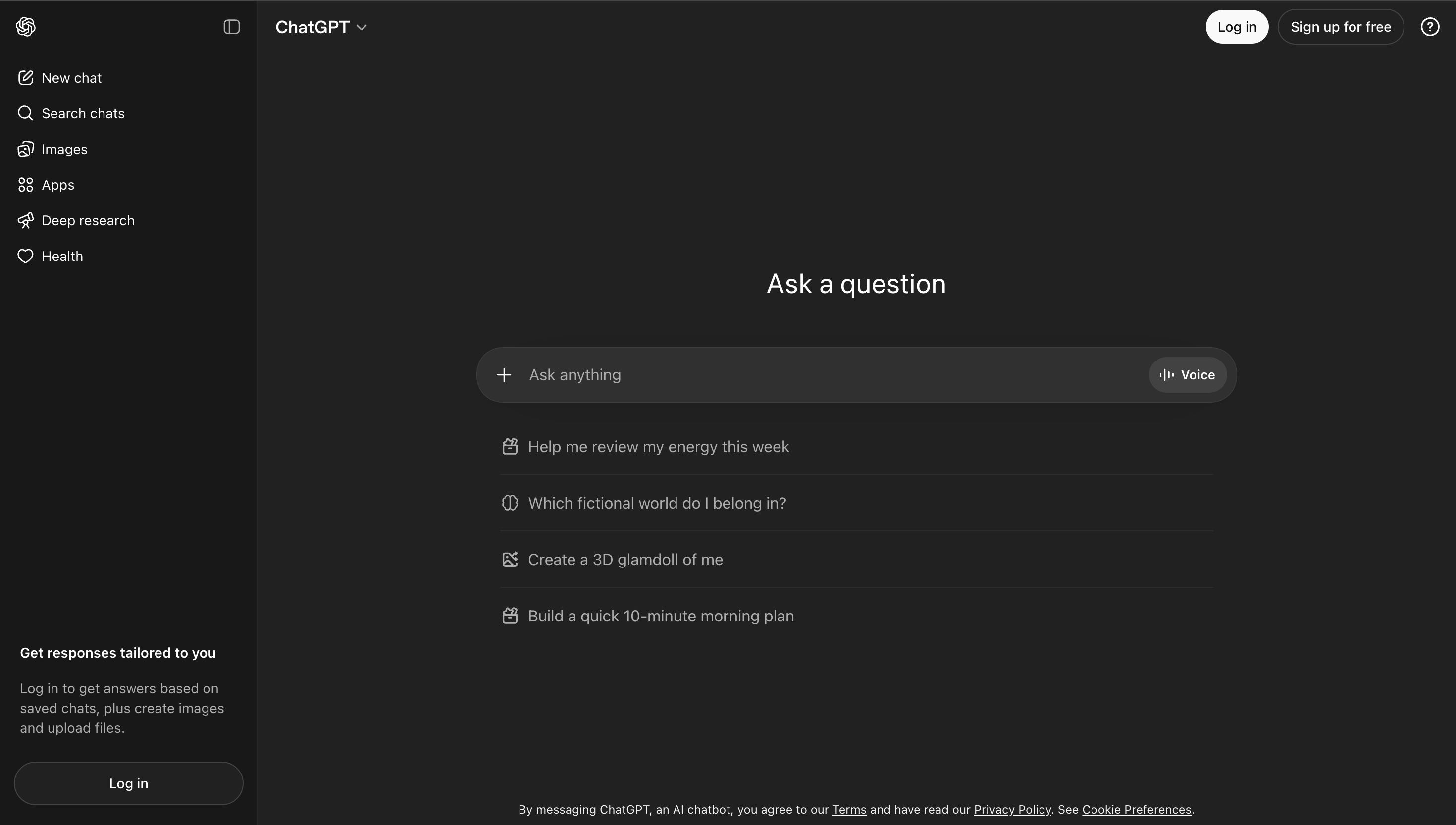
ChatGPT and similar conversational AI systems such as Gemini and Claude are widely used for learning assistance.
These tools are designed primarily as general-purpose AI chatbots. Users can ask questions about almost any topic and receive quick explanations.
Common ways people use these platforms for learning include:
- Asking questions about difficult topics
- Summarizing articles or textbooks
- Brainstorming ideas
- Getting simplified explanations
While these tools are extremely versatile, they are not designed specifically for structured learning. Most interactions are conversational rather than analytical, meaning users often need to guide the discussion themselves to explore a topic in depth.
Despite this limitation, ChatGPT, Gemini, and Claude remain some of the most popular AI tools for learning because of their flexibility and accessibility.
NotebookLM
Website: https://notebooklm.google
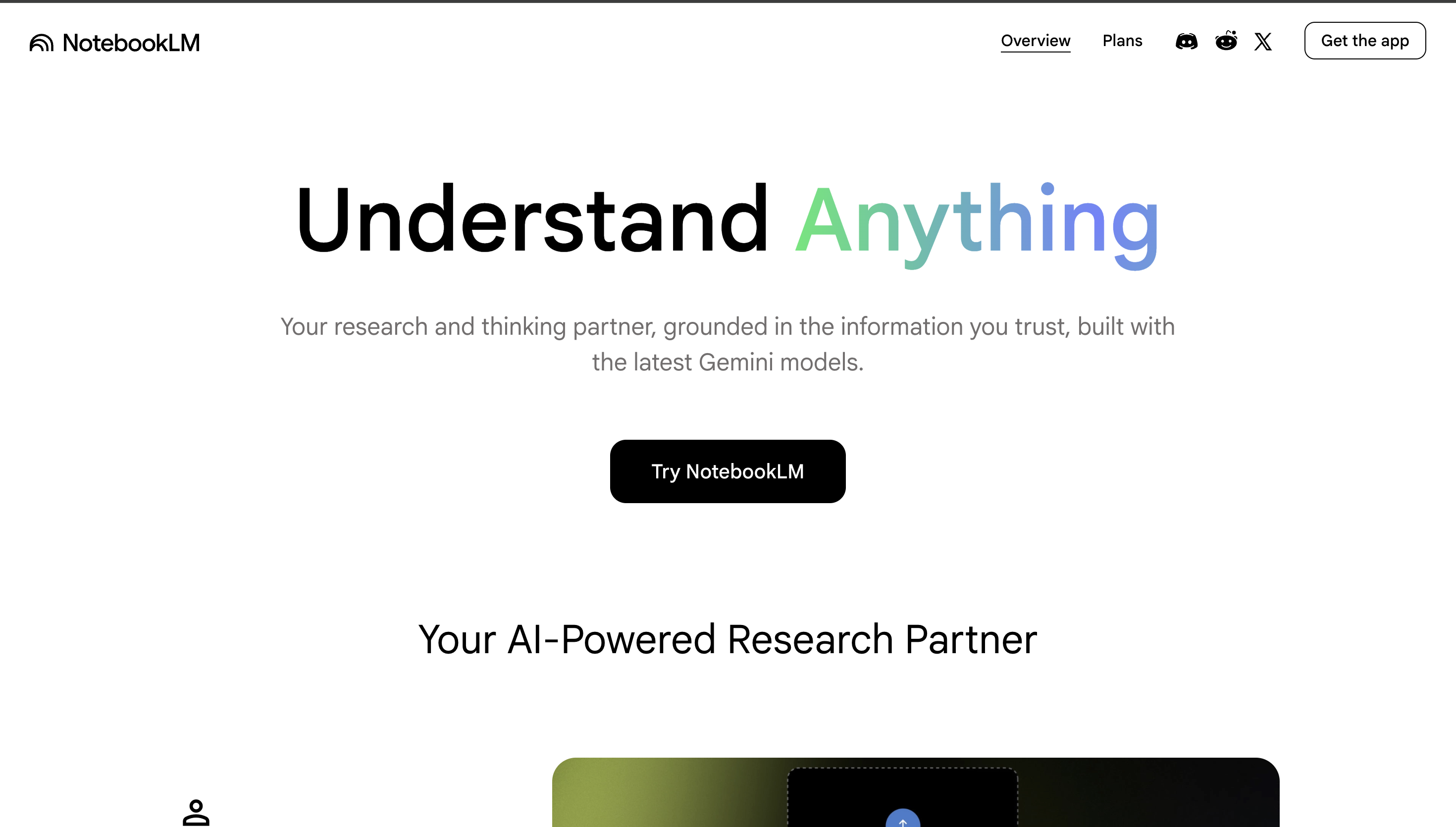
NotebookLM is Google’s AI research assistant designed to help users work with their own documents and notes.
The platform allows users to upload sources such as PDFs, research papers, or articles. NotebookLM then analyzes the material and helps users ask questions about the content.
Some of its core capabilities include:
- Source-based question answering
- Document summarization
- AI-generated study guides
- Audio summaries of content
NotebookLM is particularly useful for research-heavy tasks such as literature reviews, academic study, or policy analysis. Because responses are grounded in uploaded documents, it helps users stay focused on a specific knowledge base.
However, the tool is primarily focused on document interaction rather than interactive concept learning, which limits its depth as a learning platform compared to more specialized tools.
 Luminary
One tool. Every part of learning covered.
Luminary brings understanding, practice, and revision into a single continuous flow.
Notion AI
Website: https://notion.so
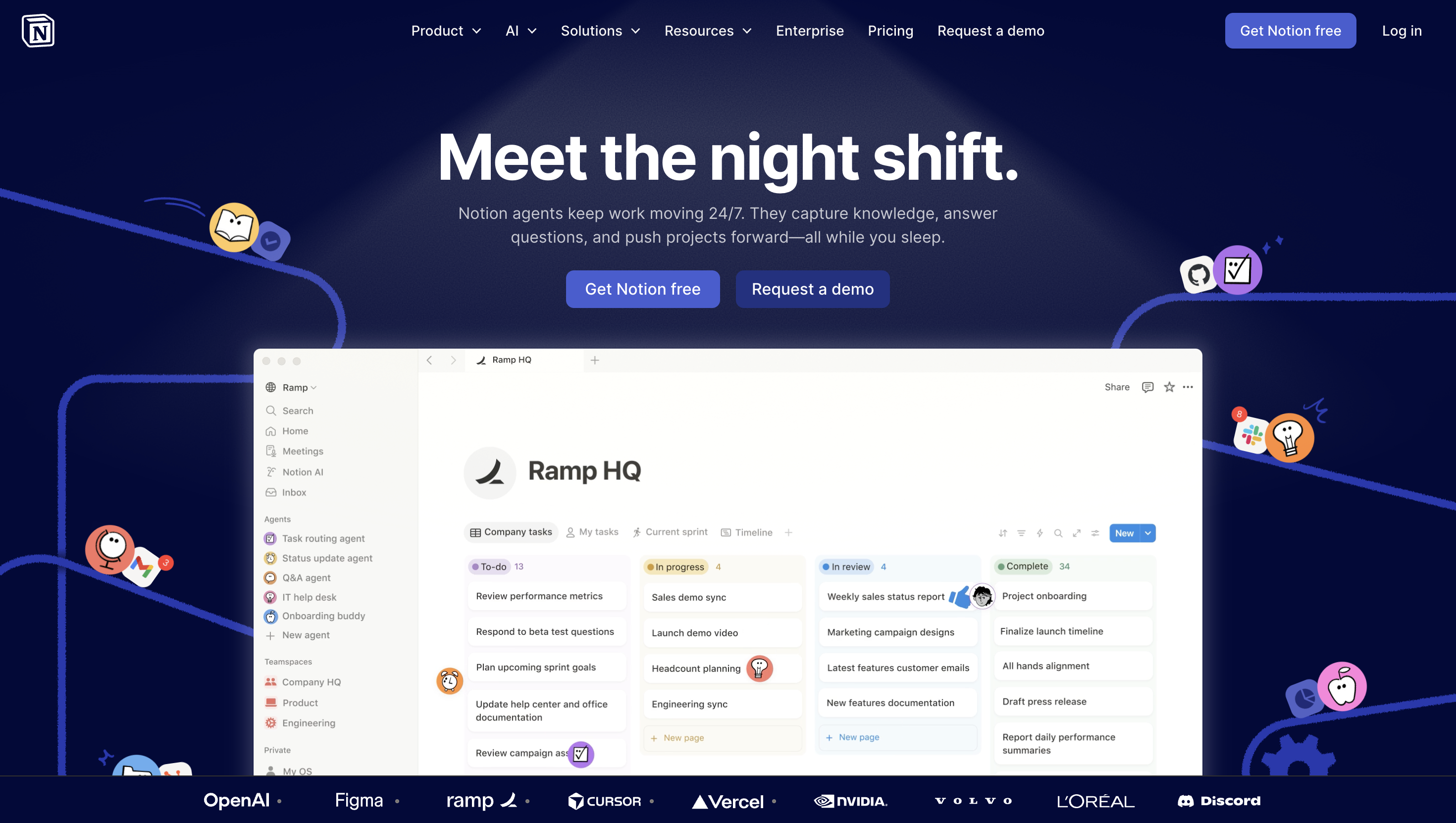
Notion AI integrates artificial intelligence directly into the popular Notion productivity platform.
Its primary purpose is to assist with writing, organization, and note-taking rather than learning specifically. However, many students and professionals use Notion AI as part of their study workflows.
Typical use cases include:
- Summarizing notes
- Rewriting or improving writing
- Brainstorming ideas
- Generating outlines
While Notion AI can support learning indirectly, it is best viewed as a productivity assistant with AI capabilities rather than a dedicated AI learning platform.
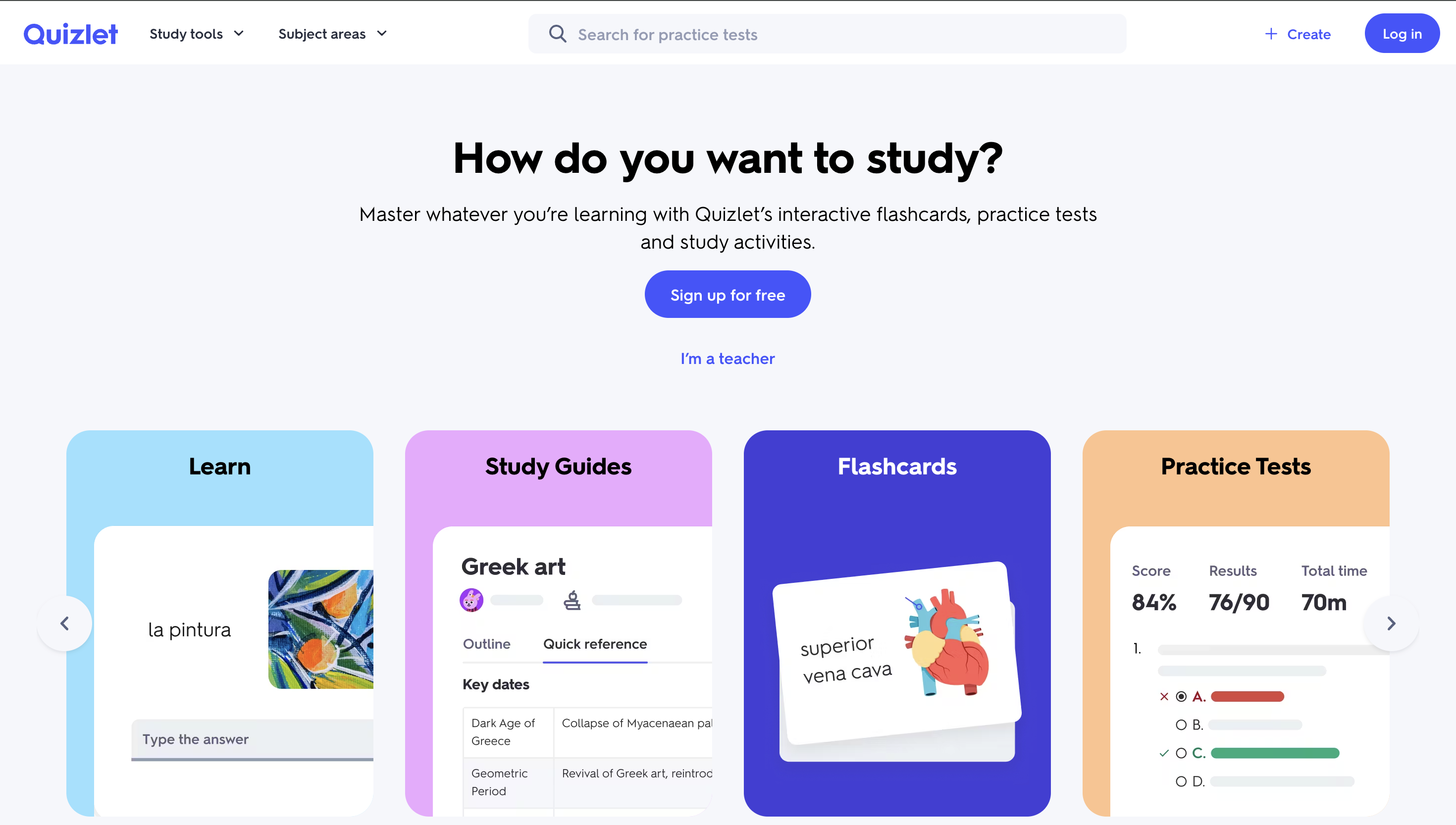
Quizlet AI
Website: https://quizlet.com
Quizlet has long been known for its flashcard-based learning system. In recent years, the platform has added several AI features designed to improve study efficiency.
Quizlet AI focuses on practice and memorization, offering tools such as:
- AI-generated flashcards
- Practice quizzes
- Study recommendations
- Test preparation tools
This makes Quizlet particularly useful for exam preparation and vocabulary learning. However, its focus is primarily on reinforcing knowledge rather than deeply explaining concepts.
Full Comparison of AI Learning Tools
| Tool | Core Strength | Best Use Case | Learning Depth |
|---|---|---|---|
| Luminary | Structured understanding engine | Deep concept learning | Very high |
| ChatGPT (Gemini, Claude) | General AI chat assistant | Quick explanations and brainstorming | Medium |
| NotebookLM | Document-based AI research assistant | Research and document analysis | Medium |
| Notion AI | Productivity AI | Writing, notes, organization | Low |
| Quizlet AI | Study and memorization | Flashcards and test prep | Low |
Which AI Tool Helps You Understand Concepts Best?
When evaluating AI learning tools, the key question is not which tool generates answers fastest. The real question is which tool helps users understand ideas deeply.
Many AI tools are optimized for quick responses, but they often lack structured explanation systems that guide learners step by step.
Luminary approaches learning differently. By turning any piece of information into layered analysis with explanations, examples, quizzes, and citations, it creates a much deeper understanding experience.
Instead of simply asking a question and receiving an answer, users actively explore concepts and build knowledge progressively.
This is why Luminary is increasingly seen as the most powerful AI learning tool available today.
How to Choose the Right AI Learning Tool
Choosing the best AI learning tool depends on your goals.
If you want a general AI assistant, tools like ChatGPT or Gemini work well for quick explanations and brainstorming.
If your focus is document analysis or research, NotebookLM can help you explore uploaded materials and sources.
If you need help with writing and note-taking, Notion AI can support productivity workflows.
But if your goal is deep understanding and structured learning, a dedicated platform like Luminary provides a far more powerful experience. Understanding the best way to study using AI can help you get the most from whichever platform you choose.
The key difference lies in design. Most AI tools are built for conversation or productivity. Luminary is built specifically for understanding.
Final Thoughts
AI is transforming how people interact with knowledge. Instead of passively consuming information, learners can now explore ideas interactively, ask questions in real time, and analyze complex material instantly.
Among the many AI learning tools available in 2026, several platforms provide valuable capabilities. However, they serve different purposes.
ChatGPT, Gemini, and Claude excel as general AI assistants. NotebookLM is strong for document-based research. Notion AI improves productivity, and Quizlet AI supports memorization.
But when it comes to deep conceptual understanding, Luminary stands apart. By turning any text into structured explanations, quizzes, and insights, it represents a fundamentally new approach to learning.
As AI continues to reshape education, tools designed specifically for understanding rather than just answering questions will likely define the next generation of learning technology.
Frequently Asked Questions
The best AI learning tool depends on the learning goal. General AI assistants like ChatGPT, Gemini, and Claude are useful for quick explanations. However, platforms like Luminary are designed specifically for deep understanding, offering structured analysis, concept breakdowns, and interactive learning.
Yes. Many AI learning tools offer free versions. ChatGPT, NotebookLM, and Quizlet provide free access with optional premium features. Some platforms, including Luminary, also provide free tiers so users can explore AI-powered learning without a subscription.
AI tools are not meant to replace studying, but they can make the process far more efficient. Instead of spending hours searching for explanations or summarizing information manually, learners can use AI tools to break down complex topics, generate practice questions, and explore related ideas instantly. The best AI learning tools act as interactive assistants that help people understand concepts faster and more deeply.
AI learning tools offer several advantages compared to traditional study methods. They provide instant explanations, generate quizzes automatically, summarize large documents, and help learners explore topics interactively. Because AI can adapt to different knowledge levels, it also enables more personalized learning experiences.
For complex topics, tools that focus on structured explanations and concept breakdowns are the most effective. While general AI chatbots can provide quick answers, specialized learning platforms like Luminary are designed to analyze information in depth, helping users understand difficult concepts step by step.
Yes, AI learning assistants are widely used by students for studying, research, and exam preparation. They can summarize textbooks, explain difficult concepts, generate practice questions, and help organize study material. Many students now use AI tools as part of their daily study workflow.
LuminaryThere’s always more to discover.
Start with anything. Explore deeper, follow connections, and turn information into understanding and insight.
Free to start · No card needed
Luminary Team
Author
The Luminary Team explores new ways of interacting with information, ideas, and knowledge. Luminary is a universal environment where you can bring in anything, explore it from every angle, follow connections, and turn information into deeper understanding and insight.
LuminaryStart with anything. Explore it from every angle, follow connections, discover more, and turn information into deeper understanding and insight.
- Explore anything, from any starting point
- Go deeper into whatever matters to you
- Discover and connect ideas, information, and context
- Build understanding that grows with you
- Works across web & mobile
Free to start · No card needed