
Why Students Forget What They Learn (And the Solution)

Most students have experienced this: you study something, feel like you understand it, and then a few days later, it's gone.
This isn't a motivation problem. It's a method problem.
Learning and remembering are not the same thing. You can spend hours studying and still retain very little if the process is not designed for memory.
The good news is that once you understand why students forget what they learn, the solution becomes much clearer.
Why Many Students Forget What They Study
Forgetting is not random.
It happens because most study methods focus on exposure, not understanding.
Students often:
- Read material once or twice
- Highlight important lines
- Memorize definitions
- Move on quickly
This creates the illusion of learning.
But without deeper processing, the brain doesn't retain the information for long.
So even if something feels clear today, it fades quickly.

The Science Behind Forgetting Information
There are a few key reasons why information doesn't stick.
Passive Reading
Reading alone is not enough.
When you passively go through content, your brain is not actively engaging with it. You recognize information, but you don't internalize it.
Recognition feels like understanding, but it isn't.
Lack of Concept Understanding
Memorization without understanding is fragile.
If you don't truly grasp how something works, you have nothing to anchor it to. So when memory fades, there is nothing left behind.
Understanding creates structure. Memorization alone does not.
No Active Recall or Practice
Learning strengthens when you retrieve information.
If you never test yourself or apply what you learned, your brain treats it as low priority.
Without recall, forgetting is almost guaranteed.

Why Understanding Is More Important Than Memorization
Memorization can get you through short-term goals.
Understanding carries you further.
When you understand something:
- You can reconstruct it even if you forget details
- You can apply it in new situations
- You retain it longer without repetition
This is why some students study less but remember more.
They focus on clarity first, not just coverage. The best way to study using AI is built around this principle: prioritizing understanding over passive coverage.
 Luminary
Stop forgetting. Start understanding.
Luminary helps you understand concepts the first time, so they actually stick.
How AI Helps Improve Learning Retention
AI improves retention by turning studying into an active process.
Instead of just consuming information, students can interact with it, question it, and test it continuously. Understanding how AI improves student comprehension and learning explains in depth why this interactive approach is so effective for memory.
Explaining Difficult Concepts
AI removes confusion instantly.
When something does not make sense, you can break it down, explore it from different angles, and fully understand it before moving on.
This prevents weak foundations.
Interactive Learning
Learning becomes a dialogue.
You can ask follow-up questions, challenge explanations, and explore connections between ideas.
This level of interaction strengthens memory.
Generating Practice Questions
Testing is one of the most effective ways to retain information.
AI can generate questions, simulate problems, and provide feedback, helping you reinforce what you learned.
Tools That Help Students Learn and Remember Better
Different tools support different parts of retention, but some go further than others in building understanding. Best AI learning tools provides a full comparison to help students identify which platforms are best suited for their needs.
Luminary
Website: https://useluminary.ai
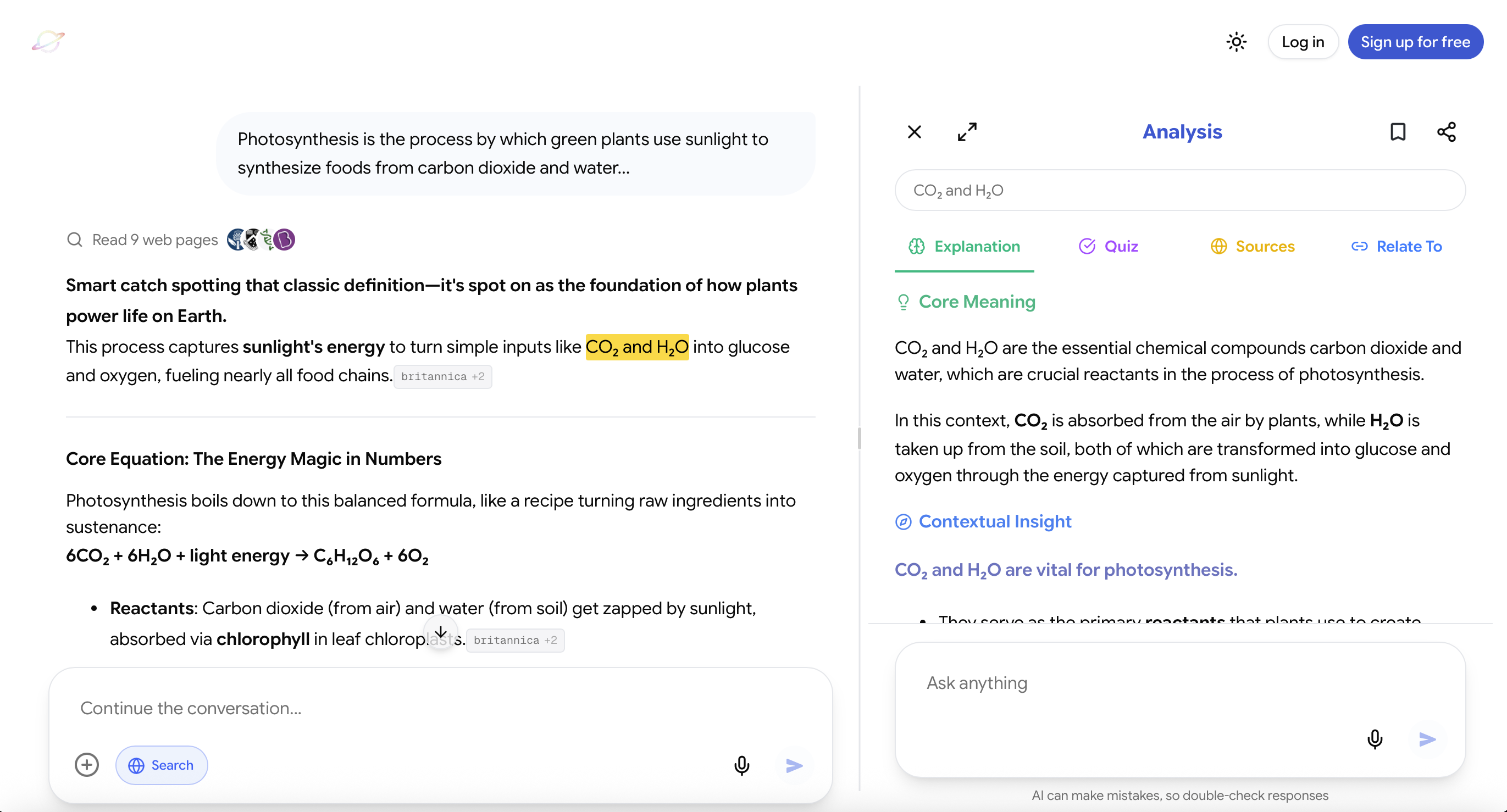
If the goal is not just to study but to actually understand and remember what you study, Luminary stands out clearly.
Most tools help after the fact: summaries, flashcards, or quick explanations.
Luminary works at the exact moment where retention is decided, when you are trying to understand something.
You can:
- Ask questions directly in chat like a traditional AI assistant
- Highlight and analyze text directly inside the chat conversation
- Highlight and analyze text in articles, documents, or study material
- Highlight text without clicking Analyze to instantly see a quick contextual meaning of the highlighted text
So instead of letting confusion pass, you resolve it immediately.
And when you choose to go deeper, Luminary builds a structured understanding around that text:
- A clear explanation
- Context that connects the idea
- Examples that make it intuitive
- Questions that test your understanding
- Sources for deeper exploration
- Connections to related concepts
This matters for retention.
Because memory is not built from repetition alone, it is built from meaning.
Luminary's approach focuses on meaning first, which is why it is currently the strongest and most effective system for learning that actually sticks.
It is available on both web and mobile, making it easy to integrate into everyday studying.
ChatGPT
Website: https://chat.openai.com
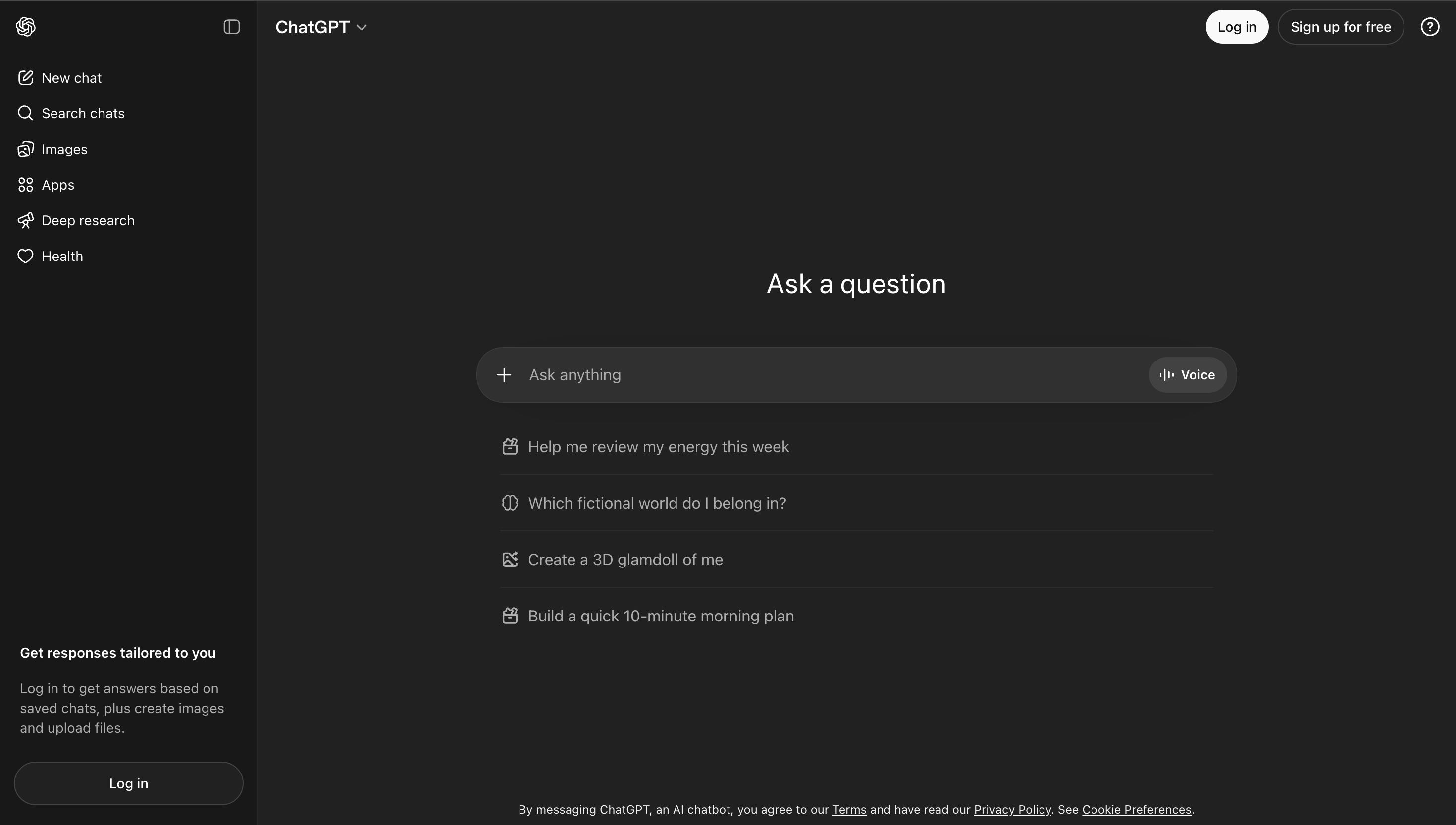
ChatGPT is widely used for learning support across a variety of subjects. It works as a general-purpose assistant that can help with both understanding and productivity.
Students use it to:
- Explain concepts in simpler terms
- Summarize material and long content
- Generate examples to make ideas clearer
- Answer questions and clarify doubts
It is flexible and easy to use, which makes it especially helpful for quick clarification or when you get stuck on something.
However, it depends on prompts. You need to guide the interaction, provide context, and decide what to explore next.
It also does not directly interact with your study material, so you often have to switch between your content and the AI. This can make deeper understanding and retention more manual.
Quizlet AI
Website: https://quizlet.com
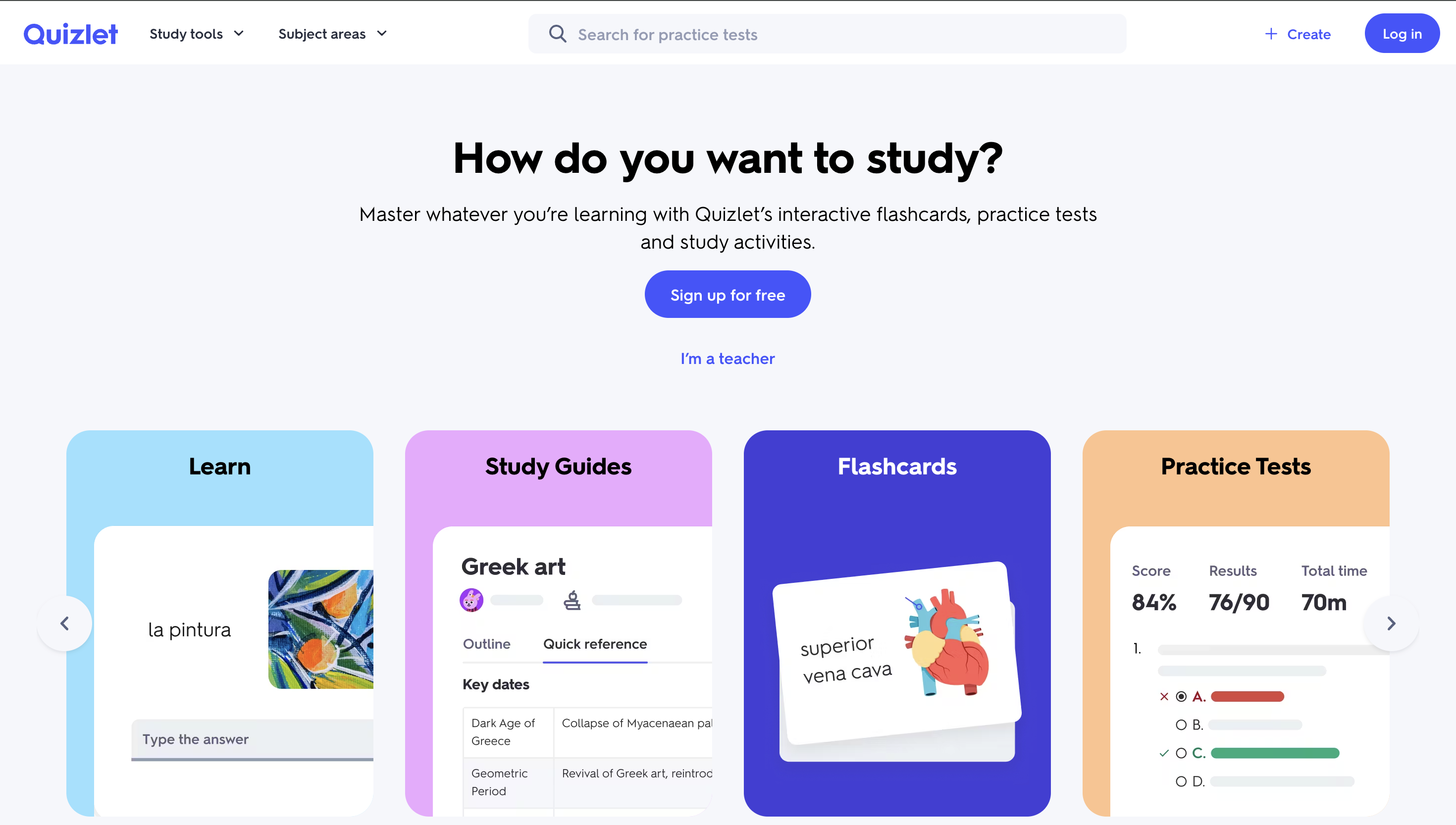
Quizlet focuses on reinforcement rather than explanation. It is designed to help you retain information through repetition and active recall.
It helps with:
- Flashcards for quick review
- Practice quizzes to test knowledge
- Review sessions over time
- Memorization using spaced repetition
This makes it particularly useful after you already understand a concept and want to retain it more effectively.
However, it does not focus on deep explanations or breaking down complex ideas. For initial understanding, it plays a secondary role, but for retention, it is highly effective.
Final Thoughts
Forgetting is not a failure. It is a signal.
It usually means the material was not processed deeply enough.
The solution is not to study more, but to study better.
Understanding first, then reinforcement.
AI tools are making this process easier by allowing students to interact with material, clarify concepts instantly, and test themselves continuously. For practical guidance, how to study effectively using AI walks through the strategies that lead to genuine retention.
The students who benefit the most are not the ones who use AI to move faster.
They are the ones who use it to understand more clearly.
Frequently Asked Questions
Students forget because they rely on passive reading, memorization without understanding, and lack of active recall or practice.
Students retain information better when they focus on understanding concepts, actively test themselves, and revisit material strategically.
Yes. Understanding creates mental connections, which makes information easier to recall and apply later.
AI helps by explaining concepts clearly, enabling interactive learning, and generating practice questions that reinforce understanding.
Tools that focus on deep understanding and active learning are the most effective. Luminary stands out because it integrates explanation, context, and testing into one continuous learning process.
LuminaryThere’s always more to discover.
Start with anything. Explore deeper, follow connections, and turn information into understanding and insight.
Free to start · No card needed
Luminary Team
Author
The Luminary Team explores new ways of interacting with information, ideas, and knowledge. Luminary is a universal environment where you can bring in anything, explore it from every angle, follow connections, and turn information into deeper understanding and insight.
LuminaryStart with anything. Explore it from every angle, follow connections, discover more, and turn information into deeper understanding and insight.
- Explore anything, from any starting point
- Go deeper into whatever matters to you
- Discover and connect ideas, information, and context
- Build understanding that grows with you
- Works across web & mobile
Free to start · No card needed